

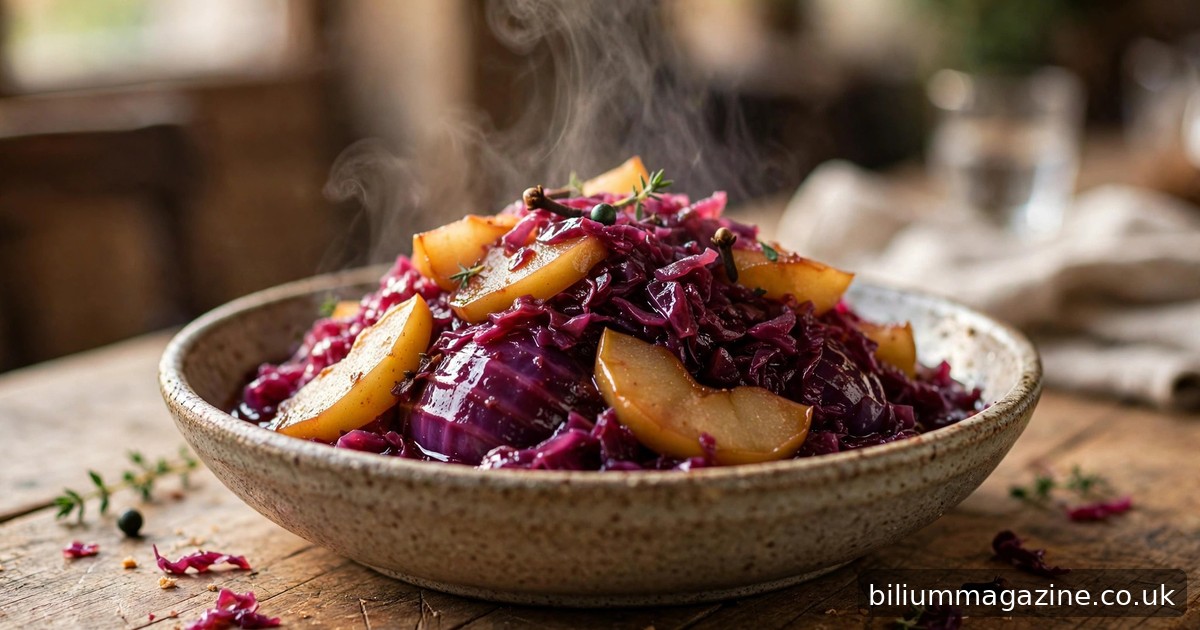
Best Rotkohl with Apples Near Me: How to Find the Real Thing
If you’re searching for the best rotkohl with apples near me, you’re probably after more than a side dish. You’re after that glossy, sweet-sour tangle of braised red cabbage you had once — at a German Christmas market, at a grandmother’s table, at a restaurant that did it the slow way — and you want it again. This guide helps you find it: what the dish actually is, how to tell the real thing from the canned version, where to look, and how to make it at home when the restaurants disappoint.
Rotkohl (literally “red cabbage”) is one of Germany’s signature side dishes: shredded red cabbage braised low and slow with apple, onion, vinegar, sugar, and warm spices until it turns tender, jammy, and brilliantly purple-red. The apple isn’t decoration — it’s structural. Its acidity keeps the cabbage’s color vivid and its tartness balances the sweetness. Without it, you get a one-dimensional braise.
Here’s the honest part: most restaurants outside Germany serve rotkohl from a can or a food-service tub. The difference between that and house-made is the whole game, and this guide shows you how to spot it before you order.
What Rotkohl with Apples Actually Is
At its simplest, rotkohl is shredded red cabbage cooked down with diced or grated tart apple, sliced onion, vinegar (usually red wine or apple cider), a little sugar, and whole spices — bay leaf, cloves, and often juniper berries, sometimes a stick of cinnamon. The pot simmers covered for an hour or more, and the cabbage collapses into silky ribbons while the apple melts into the braise, thickening it naturally with its pectin.
The result should taste sweet and sour in balance: the vinegar gives it a bright tang, the apple and sugar round it off, and the spices perfume it without dominating. A great rotkohl glistens — the cabbage holds a sheen of reduced cooking liquid — and the color is a deep, vibrant purple-red, not muddy brown. Muddy brown means it was cooked too hard or the acid balance was wrong; it’s the easiest visual quality check there is.
In Germany the dish goes by two names, and the menu can tell you something about the kitchen. Rotkohl dominates in the north; Blaukraut is the term in Bavaria, Swabia, and Austria — same dish, usually a touch tarter in the south and a touch sweeter in the north. If you see “Blaukraut” on a menu, you’re likely eating in a Southern German or Austrian kitchen; “Rotkohl” suggests northern roots. Both are the real thing. Don’t confuse either with sauerkraut: that’s white cabbage fermented raw (crunchy, pale, probiotic), while rotkohl is braised hot (tender, sweet-tart, no live cultures).
Traditionally it sits alongside pork — roast pork, pork knuckle, sausages, duck at Christmas — because the sweet-sour edge cuts through rich, fatty meat. Some family recipes start with rendered bacon fat instead of butter, which deepens the savory side. Others stir in a spoonful of lingonberry or red currant jam. Regional households argue about these details; the constants are red cabbage, apple, vinegar, and time.
What Makes a Great Rotkohl
The difference between memorable rotkohl and forgettable rotkohl comes down to a handful of decisions the kitchen makes.
- Fresh cabbage, not canned. Canned rotkohl is pre-cooked to softness in a sweet-tart brine. It’s uniform and one-note. Fresh cabbage braised in-house keeps a slight bite and absorbs the spices properly.
- Tart apples, in the right amount. Granny Smith is the standard in English-language recipes; traditional German cooks reach for Boskoop or Elstar in season. The apple should be present but not dominant — roughly one apple per medium head of cabbage. Overly sweet apples add sugar without the acidity the dish needs.
- Time. Thirty minutes gets you a passable weeknight side; 60 to 90 minutes gets you the real thing, with the cabbage fully tender and the flavors married. Rotkohl famously improves overnight — the spices settle and the sweet-sour balance evens out — so a restaurant that makes it a day ahead is doing it right.
- Whole spices, removed before serving. Bay leaf, a few whole cloves (sometimes stuck into an onion half, the old-fashioned way), juniper berries. If you bite into a whole clove, the kitchen was careless. If there’s no spice character at all, they were lazy.
- Color and sheen. Vibrant purple-red, glossy, with the liquid reduced to a light glaze — not swimming in watery juice, not dry and dull.
Nutritionally it’s a quiet overachiever: roughly 30 calories per 100 grams, a couple of grams of fiber, and red cabbage is rich in vitamins C and K plus anthocyanin antioxidants. The asterisk is the added sugar and fat in traditional preparations — worth knowing, not worth worrying about at restaurant portions.
How to Find the Best Rotkohl with Apples Near Me
This is a niche dish, so the search needs more care than “German restaurant near me” — though that’s where it starts.
Search German restaurants first, then verify. Pull up German restaurants, Austrian restaurants, and European delis in your area. Then — this is the step most people skip — check the actual menu or call. Many German-American restaurants serve only sauerkraut and spaetzle, and their “red cabbage” is the canned kind. Ask one question: “Is your rotkohl made in-house?” The word you’re listening for is “hausgemacht” (house-made). A confident yes means the dish matters to them. Hesitation means the tub.
Read reviews with the word “rotkohl” in them. Generic praise for the schnitzel tells you nothing. Search reviews for “cabbage” or “rotkohl” specifically and look for words like “sweet,” “tender,” “homemade,” or complaints that it was “mushy” or “too sweet.” One detailed cabbage review beats twenty generic ones. Our guide to finding the best restaurants near you walks through the review-reading method in more detail, including how to weigh reviewers who’ve ordered the same dish multiple times.
Don’t overlook delis and markets. Family-run European delis often sell house-made rotkohl by the pound from the prepared-foods case, and it’s frequently better than what sit-down restaurants serve — these are recipes from someone’s grandmother, made in volume for people who know the difference. Check Eastern European and German specialty markets, especially around the holidays.
Time it for the season. Rotkohl is at its best and most available from October through December, when German restaurants lean into holiday menus — roast goose, duck, and pork with all the trimmings. A restaurant that serves rotkohl year-round is committed; one that brings it back for Christmas is traditional. Both are worth trying.
Order it as the test of the kitchen. If you’re on the fence about a German restaurant, the rotkohl is the canary in the coal mine. A kitchen that braises its own cabbage with care almost certainly handles its schnitzel and sausages with care too. Order the rotkohl first, mentally, and let it set your expectations.
What to Expect: Price, Portions, Pairings
As a side dish, rotkohl is inexpensive — typically $5–$9 as an à la carte side at American German restaurants as of 2026, or included with entrées like sauerbraten, rouladen, and pork shank that run $22–$35. At a deli counter, expect roughly $8–$12 per pound. It should arrive hot and steaming; lukewarm rotkohl is a sign it was portioned from a cold tub and half-heartedly reheated.
Pairing is where the dish earns its keep. The classic partners are roasted or braised pork in any form, duck (especially at Christmas), bratwurst and other sausages, and beef rouladen. The sweet-sour acidity does the same job as a chutney or a sharp mustard: it slices through fat and resets your palate between bites of rich meat. If you’re ordering vegetarian, it works beautifully alongside potato dumplings (Knödel) with mushroom gravy.
Wine-wise, the traditional German answer is a dry Riesling — the acidity matches the dish — or a Spätburgunder (German Pinot Noir) when it’s served with red meat. A crisp lager does the job too; this is not a dish that demands ceremony.
The Homemade Shortcut: A Forgiving Recipe
If no restaurant near you does it justice, make it. Rotkohl is one of the most forgiving dishes in the German canon — it barely needs measuring, and it tastes better the next day, which makes it ideal for cooking ahead.
Here’s the consensus method from German home cooks: melt 2 tablespoons of butter (or bacon drippings, for the traditional route) in a heavy pot and soften one diced onion for a few minutes. Add one medium head of red cabbage, shredded, and one tart apple, grated or diced. Pour in 3 tablespoons of red wine vinegar, 2 tablespoons of brown sugar, half a cup of apple cider or juice, a bay leaf, 3–4 whole cloves, a few juniper berries if you have them, and a teaspoon of salt. Stir, bring to a simmer, cover, and cook on low for 60 to 90 minutes, stirring occasionally and adding a splash of water or cider if it looks dry. Fish out the bay leaf and cloves before serving.
Two tips that matter: the cabbage should be tender but not collapsed into mush, and the finished dish should be moist and glossy, not soupy — if there’s excess liquid at the end, uncover the pot for the last 15 minutes. It keeps 5 to 7 days refrigerated and freezes well for up to 3 months; the apples will soften a little more after freezing, but the flavor holds.
Frequently Asked Questions
What’s the difference between rotkohl and sauerkraut?
They share a country but nothing else. Rotkohl is red cabbage braised hot with apple, vinegar, and spices — sweet-tart, tender, and colorful. Sauerkraut is white cabbage fermented raw with salt — sour, crunchy, pale, and probiotic. They aren’t substitutes for each other on a plate.
Is rotkohl the same as blaukraut?
Yes — same dish, different regional names. “Rotkohl” is used in northern Germany; “Blaukraut” in the south (Bavaria, Swabia) and Austria. Southern versions tend to run slightly tarter, northern ones slightly sweeter, but the difference is a tendency, not a rule.
Can I make rotkohl ahead of time?
Absolutely — you should. Rotkohl tastes better on day two or three, after the flavors have melded in the fridge. Make it 1–2 days before serving and reheat gently on the stovetop. It also freezes well for up to 3 months.
What apple is best for rotkohl?
A tart, firm apple: Granny Smith is the reliable choice; Braeburn and Fuji also work. Traditional German cooks use Boskoop or Elstar when in season. Avoid sweet, soft apples like Red Delicious — they add sugar without the acidity that keeps the cabbage vivid and balanced.
Is rotkohl healthy?
The cabbage itself is: low-calorie (about 30 calories per 100g), high in fiber, rich in vitamins C and K and anthocyanin antioxidants. Traditional recipes add sugar, vinegar, and sometimes bacon fat, so the finished dish is a balanced side rather than a health food — homemade lets you control all three.
Is rotkohl gluten-free?
Traditionally, yes — cabbage, apple, onion, vinegar, sugar, and spices contain no gluten. The one caveat is vinegar: most wine and cider vinegars are fine, but if you’re highly sensitive, confirm the brand, since some malt vinegars contain gluten.
The Takeaway
The best rotkohl with apples near me is the one made in-house: vibrant purple-red, glossy, sweet-sour in balance, with whole-spice perfume and apple melted into the braise — never the uniform canned version. Ask for “hausgemacht,” check the color, and time your hunt for the holiday season when German kitchens are at their best. And if no restaurant near you clears the bar, the homemade version is forgiving, cheap, and better on day two — which is exactly how it should be.
