

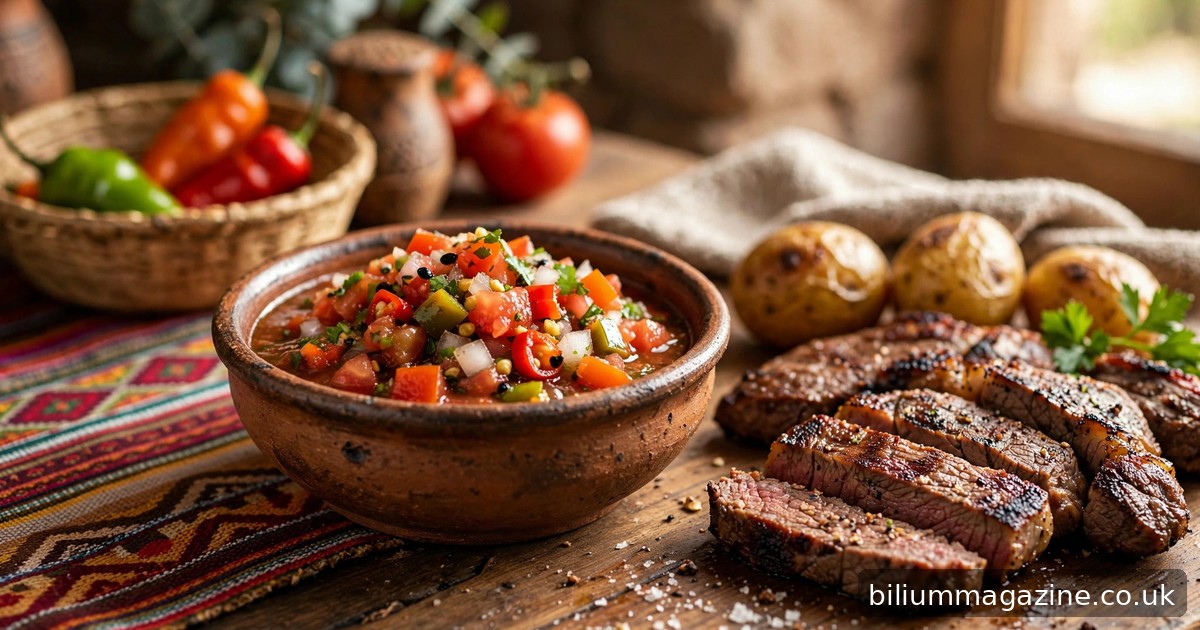
Best Llajwa Salsa Near Me: Where to Find It
Searching best llajwa salsa near me usually returns a handful of recipe blogs and not much else. Google understands the words, but it doesn’t quite understand the mission: you’re looking for Bolivia’s national condiment, served fresh, at a real place you can actually visit — not a five-year-old forum thread from someone’s trip to La Paz.
The problem is that llajwa is barely a restaurant dish. It’s a house thing. In Bolivia, it lives in little bowls on every table, in hand-tied plastic bags at street-food carts, and in the memories of every Bolivian cook working abroad. Finding the good stuff means knowing what it is, where Bolivians actually eat, and how to tell the real thing from a jar with a fancy label. This guide covers all three.
Quick Answer: Where to Find Llajwa Near You
Short on time? Here’s the fast version. Llajwa (pronounced lyah-wah) is a fresh Bolivian chili salsa made from tomatoes, locoto peppers, and native herbs. Outside Bolivia, your best sources are, in order: a Bolivian restaurant (it usually arrives free with your meal), a Latin or South American grocery that stocks jarred or house-made versions, Bolivian food trucks and festival stalls, and — honestly the most reliable option for most people — your own blender, because the real thing takes about ten minutes and five ingredients.
What Is Llajwa, Exactly?
Llajwa — sometimes spelled llajua — is Bolivia’s everyday hot sauce, and calling it “hot sauce” undersells it. It’s a fresh, raw salsa ground from ripe tomatoes and locotos (Capsicum pubescens, the thick-walled Andean chili with distinctive black seeds), often with a little white onion, salt, and one of two regional herbs: quillquiña (sometimes written quirquiña), a pungent herb in the coriander family favored in Cochabamba, or huacatay (wakataya), the black-mint herb of the Altiplano and the Andean valleys.
The method matters as much as the ingredients. Traditional llajwa is ground on a batán — a sloped stone grinding slab found in most Cochabamba and Altiplano households. Stone-grinding gives the salsa a particular texture: not silky, not fully chunky, but something between a purée and a relish, with the tomato juice loosening everything into a spoonable sauce. A blender is the accepted modern substitute, and honestly, most Bolivian home cooks outside Bolivia use one without apology.
Llajwa is consumed all over Bolivia — it accompanies the majority of the country’s dishes. It’s a dip for plain boiled potatoes and bread, something you stir into soup before the main course, a drizzle over anticuchos (grilled beef-heart skewers), chicharrón (crispy pork), silpancho (breaded beef cutlet), salteñas (Bolivian empanadas), and pollo a la brasa. Street vendors keep bowls of it on their carts, and takeaway orders often come with the salsa dispensed in small hand-tied clear plastic bags.
It’s also one of the few salsas with legal protection. In 2008, the Bolivian government granted the traditional name “llajua” trademark protection — an official acknowledgment that this isn’t just a recipe, it’s cultural heritage. It’s even crossed the border: llajwa is widely made and eaten in northwestern Argentina, where proximity to Bolivia brought the tradition along with the migration routes.
Llajwa vs. Mexican Salsa: Why It’s Not the Same Thing
Every search result seems to file llajwa under “salsa,” which creates the wrong expectations. Mexican restaurant salsas — roja, verde, pico de gallo — share tomatoes and chiles, but llajwa is built differently, and knowing the difference helps you recognize the real thing.
The chili is different. Locoto (Capsicum pubescens) is the Andean domesticated species, thick-fleshed and slow-burning, with a heat level comparable to a habanero but a fruitier, almost apple-like flavor. Mexican salsas usually run on jalapeños, serranos, or dried chiles like árbol and guajillo. A llajwa made with jalapeños (common outside Bolivia) tastes perfectly pleasant — but a cook using actual locoto is telling you something about their standards.
The herbs are different. Quillquiña and huacatay have no real Mexican equivalent. Quillquiña is sharp, citrusy, and more pungent than cilantro; huacatay is minty, almost medicinal in its intensity. When neither herb is available, cilantro is the standard substitute — and most Bolivian restaurants abroad use it. That’s fine. But a spot that tracks down quillquiña or huacatay is the spot you remember.
It’s served raw and fresh. Many Mexican salsas are cooked down; llajwa is almost always uncooked, which gives it a bright, alive flavor and a short shelf life. Fresh llajwa is vivid — red or green, glossy, aromatic. If the llajwa in front of you tastes flat, brownish, and vinegary, it’s either ancient or out of a jar that’s been sitting too long.
The honest truth: if you’ve only had jarred “Bolivian-style” hot sauce, you haven’t had llajwa. The fresh version is to the jarred one what fresh guacamole is to the tub from a supermarket chiller.
What Makes a Great Llajwa — and a Bad One
Before you start hunting, it helps to know the target. Here’s what separates memorable llajwa from forgettable.
Color with intent. Red llajwa gets its color from ripe tomatoes and red locotos; green versions lean on more herbs, huacatay, or green locotos. Either way, the color should look alive — bright, glossy, freshly ground. Dull brownish-red means oxidation and age.
Texture: ground, not blended smooth. The batán tradition leaves a signature: a rustic, slightly coarse body with visible tomato flesh and herb flecks, loosened by tomato juice. A llajwa that’s been liquified to baby-food smoothness has lost its character; one with big raw chunks of onion is just chopped salad.
Heat with flavor, not just pain. Locoto brings a slow, building warmth — fruity first, fiery second. Good llajwa has a heat level the maker can defend: many Bolivian cooks adjust the locoto count to the audience. The tell of a bad version is heat without flavor — the raw burn of a pepper thrown in for machismo, or the flat, chemical kick of extract-based heat.
The herb signature. This is the connoisseur test. Quillquiña gives Cochabamba-style llajwa its unmistakable pungent, citrusy edge; huacatay gives Altiplano versions a minty depth you won’t find in any other salsa on earth. Cilantro-substitute versions are perfectly good, but when a cook uses the real herb, the llajwa stops being generic “spicy tomato salsa” and becomes unmistakably Bolivian.
Freshness above all. Real llajwa is made to be eaten within a day or two. The best sign in a restaurant: the server sets a small bowl on your table without you asking, and it tastes like it was ground that morning — because it was. If a place charges extra for a thimble of brownish sauce, keep your expectations low.
How to Find the Best Llajwa Salsa Near Me
Generic searches fail for llajwa because it’s rarely listed as a menu item — it’s an accompaniment, a condiment, a given. You find it by finding the right kitchens. Work the problem like this.
Step 1: Search for Bolivian restaurants, not llajwa. Type “Bolivian restaurant near me” or “restaurante boliviano” into Google Maps. Outside South America, the Bolivian diaspora is concentrated in specific cities — in the US, think the Washington DC/Maryland/Virginia area, New York, and parts of California; in Europe, pockets in Spain and the UK. If you’re near one of these communities, you’re in luck: a good Bolivian restaurant serves llajwa as automatically as a pizzeria serves parmesan.
Step 2: Read reviews for the magic word. Search reviews for “llajwa” (and “llajua” — both spellings appear). Diners who mention the salsa by name are usually the ones who know what they’re talking about. A review that says “the llajwa here is the real deal, proper locoto heat” tells you more than fifty generic five-star ratings.
Step 3: Ask for it by name — and ask which herb. This is the move that separates tourists from regulars. When the bowl arrives, ask: “Is this made with quillquiña or huacatay?” A cook who lights up at the question is a cook who cares. Restaurants that make it fresh daily will tell you proudly; places using a jar will change the subject.
Step 4: Check Latin and South American groceries. Larger Latin markets — especially ones serving Andean communities — sometimes stock jarred llajwa or house-made tubs in the deli section. Jarred is a compromise, but a decent one for home use; look for short ingredient lists (tomato, locoto, salt, herbs) and skip anything with vinegar high on the label. Some import brands from Bolivia do exist, though availability shifts constantly, so ask the store staff rather than trusting an online listing from 2022.
Step 5: Follow the festival calendar. Bolivian Independence Day is August 6, and diaspora communities celebrate with food festivals where home cooks — the people who make the best llajwa on the planet — sell plates of anticuchos, salteñas, and silpancho with their own family-recipe salsa. One August festival can teach you more about llajwa than a year of restaurant visits.
Step 6: Order from Bolivian spots on delivery apps. Bolivian restaurants on delivery platforms often list “hot sauce” or “llajwa” as a side or included condiment — in Centerville, Ohio, for example, a Bolivian chicken spot’s reviews rave specifically about its green llajwa served with the chicken dinners. Search the delivery apps for “Bolivian” in your area and check the sides menu; the llajwa sometimes hides there even when it isn’t on the website.
If you hunt down the best version of every dish you love, our guide to finding the best restaurants near you covers the review-reading method in more detail — the same dish-name-search approach works for any condiment or specialty that doesn’t show up in restaurant categories.
What to Expect: Price and Timing
In Bolivia, llajwa is essentially free — a bowl on the table, a bag with your takeaway, part of the hospitality. Outside Bolivia, expectations should shift: at a Bolivian restaurant, the table salsa is still usually complimentary with a meal. Jarred versions at Latin groceries typically run a few dollars or pounds — think the price of a decent jar of salsa, not a specialty import.
Timing matters less than with seasonal dishes, since tomatoes and peppers are year-round, but there’s a soft peak around August 6 (Bolivian Independence Day), when festival stalls and community celebrations put out their best batches. If you want to taste llajwa made by someone’s grandmother rather than a line cook, festival season is your window.
One more honest note: because the Bolivian diaspora is smaller than the Mexican or Colombian ones, many cities have zero Bolivian restaurants. If your “near me” search comes up empty, the homemade shortcut below isn’t a consolation prize — it’s how most Bolivians abroad actually get their llajwa.
The Homemade Shortcut: Real Llajwa in 10 Minutes
Here’s the thing the recipe blogs bury under ads: llajwa is one of the simplest salsas in the world to make. The traditional Bolivian home recipe uses four ingredients, and the “hard” part is finding locotos.
What you need:
- 2–3 large ripe tomatoes (the redder and riper, the better)
- 1–2 locoto peppers, seeded (substitute: jalapeños or fresnos if locotos are unavailable — the flavor shifts, but it works)
- A small handful of quillquiña if you can find it at a Latin market; otherwise fresh cilantro, or huacatay if you’re lucky enough to source it
- 1 tablespoon finely chopped white onion (optional but traditional in many households)
- Salt to taste, and a drizzle of neutral oil if you like a slightly richer body
The method: Roughly chop the tomatoes and peppers. Grind everything together — a blender or food processor on short pulses gets you closest to the batán texture; you want a coarse, juicy purée, not a smoothie. Stir in the reserved tomato juice, salt to taste, and let it sit ten minutes so the flavors marry. That’s it. Eleven minutes, one appliance to wash.
A few honest notes from Bolivian home cooks: seed the locotos if you want flavor without punishment — the heat lives in the seeds and membranes. Don’t cook it; llajwa is a raw salsa, and cooking kills the brightness that defines it. And make only what you’ll eat in two or three days: like all fresh salsas, it fades fast, though it freezes surprisingly well in small portions.
Regional Variations Worth Knowing
Once you’ve tasted standard llajwa, the regional differences become the fun part — and they’re a great conversation starter at Bolivian restaurants.
Cochabamba style: The benchmark. Tomato-red, quillquiña-forward, medium heat. Cochabamba is Bolivia’s culinary capital, and its llajwa is the version most Bolivians abroad are trying to recreate. If a restaurant owner is from Cochabamba, expect this style and expect them to be proud of it.
Altiplano style: Higher altitude, different herbs. Huacatay replaces quillquiña, and the result is greener, more aromatic, sometimes with a faint smokiness — some cooks dry or toast ingredients first. This is the llajwa of La Paz street food: the one spooned over anticuchos at night markets.
Northwestern Argentine style: Across the border in Salta and Jujuy, llajwa appears with a slightly different accent — often simpler, sometimes hotter, served with empanadas salteñas and locro. If you’re in Argentina, ask for it; if you’re elsewhere, Argentine restaurants from the northwest occasionally carry the tradition.
None of these is “the best” — they’re all the best, depending on whose grandmother you ask. The point is that llajwa isn’t one recipe. It’s a family of recipes, and the version you love most is probably the one made by someone who grew up grinding it on a batán.
Frequently Asked Questions
Is llajwa very spicy?
It depends entirely on the cook’s locoto ratio. Traditional llajwa ranges from pleasantly warm to seriously hot — locoto sits roughly at habanero heat level, but the tomato base and fresh herbs round it out. At restaurants, it’s fine to ask for it mild or on the side; Bolivians adjust the heat to the table as a matter of course.
Is llajwa the same as Mexican salsa?
No, though they share a family resemblance. Llajwa is defined by locoto peppers and Andean herbs (quillquiña or huacatay), it’s always served raw and fresh, and it’s a daily table condiment rather than a menu item. The flavor is brighter, more herbaceous, and less cooked-down than most Mexican restaurant salsas.
What do you eat llajwa with?
Almost everything in Bolivian cooking: grilled meats, fried chicken, anticuchos, salteñas, empanadas, boiled potatoes, bread, and stirred into soups. Think of it the way Italians think of olive oil — not a dish, but the thing that completes dishes.
Can I buy llajwa in a jar?
Sometimes, at Latin or South American groceries serving Andean communities. Jarred llajwa is a workable backup, but check the ingredient list — tomato, locoto, salt, and herbs is what you want; vinegar-heavy formulas taste like generic hot sauce. Fresh, homemade, or restaurant-made is always better.
How long does homemade llajwa keep?
Two to three days in the refrigerator, and the flavor is best on day one. It also freezes well in small portions — many Bolivian home cooks abroad make big batches and freeze them in ice-cube trays for exactly this reason.
What’s the difference between red and green llajwa?
Red llajwa is tomato-dominant with red locotos; green versions use more fresh herbs (huacatay, quillquiña), green locotos, or less tomato. Both are authentic — the difference is regional and seasonal, not a quality ranking.
The Takeaway
The search for the best llajwa salsa near me ends the way most good food hunts end: not with a listicle, but with a kitchen that makes it fresh. Find the Bolivian restaurant in your area, ask which herb they grind it with, and judge the bowl on the table — bright color, rustic texture, heat with flavor behind it. And if there’s no Bolivian restaurant within reach, ten minutes with a blender gets you closer to La Paz than any jar ever will. The batán is traditional, but the craving is universal.
