

Best Juane Near Me: Where to Find It
Type best juane near me into Google and the results are a mess — map pins for people named Juane, restaurants with “Juan” in the name, and nothing about the actual dish. That’s because juane isn’t a coastal-Peruvian restaurant staple like ceviche or lomo saltado. It’s the signature dish of the Peruvian Amazon, and finding a good one means looking for a very specific kind of Peruvian kitchen.
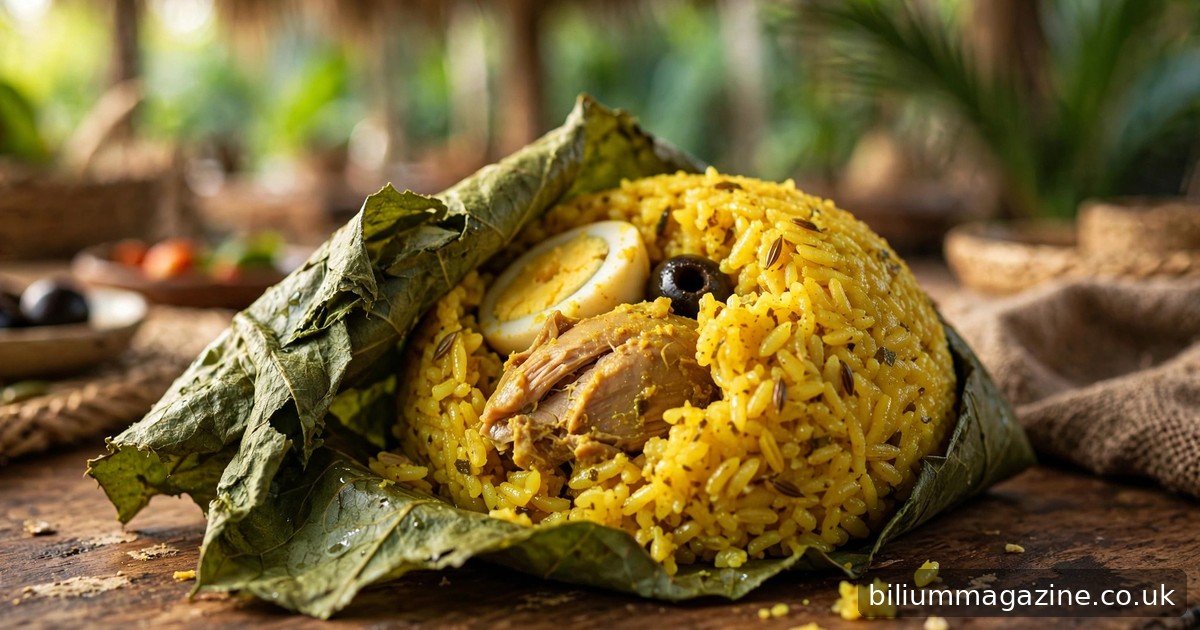
Juane is seasoned yellow rice, chicken (traditionally gallina, a mature hen), hard-boiled egg, and black olives, all wrapped in a fragrant bijao leaf and steamed into a compact, portable parcel. It’s festive food, travel food, and cultural identity in one green bundle. This guide explains what it is, what separates a great juane from a sad one, and how to track down the real thing near you — including the one date on the calendar when your chances multiply.
Quick Answer: Where to Find Juane Near You
Short on time? Juane is an Amazonian Peruvian specialty, so skip the ceviche bars and look for Peruvian restaurants that mention the jungle regions — San Martín, Loreto, or Ucayali — or Amazonian dishes on their menus. Search reviews for “juane” by name, call ahead (it’s labor-intensive and often made in batches), and check Peruvian community festivals — especially around June 24, the Fiesta de San Juan, when juane is the dish of the day. No Peruvian restaurant nearby? The homemade version is very achievable with banana leaves from a Latin or Asian grocery.
What Is Juane, Exactly?
Juane is the most iconic dish of the Peruvian jungle. At its heart is rice seasoned with palillo (turmeric), cumin, oregano, garlic, and onion — giving it that golden-yellow color — mixed around a piece of chicken, a hard-boiled egg, and black olives. The whole assembly is wrapped in bijao leaves (large, waxy jungle leaves similar to banana leaves), tied into a round parcel, and steamed or boiled until everything melds together.
Unwrap one and the first thing that hits you is the smell: the bijao leaf perfumes the rice with a grassy, earthy aroma you can’t get any other way. The rice is ever-so-slightly sticky, the chicken tender from steaming in its own juices, the egg and olive buried like surprises in the center. Traditionally the meat is gallina — an older hen, yellower and fattier and more flavorful than standard chicken — though most restaurants outside Peru use regular chicken, which is perfectly good.
The name carries two origin stories, and both are worth knowing. According to the first, Spanish missionaries in the jungle thought the round leaf-wrapped parcels resembled the severed head of Saint John the Baptist — San Juan, the patron saint of the Amazon — and named the dish for him. The second theory predates the Spanish entirely: indigenous river communities along the Putumayo, Marañón, Huallaga, and Ucayali wrapped foods in bijao leaves in a cooking process called huanar, which became huane, then juane. Either way, the dish is inseparable from the Fiesta de San Juan on June 24, when the Amazon celebrates with riverside swimming, drinking, dancing — and enormous juanes. Making the biggest, tastiest juane on June 24 is a point of genuine pride, and families exchange them like edible trophies.
There’s a practical genius to juane, too. The leaf wrapper is biodegradable, it keeps the food warm and moist, it flavors the contents, and the round compact shape was designed for travel — jungle journeys, river trips, festival days. It’s arguably the original takeaway container.
Juane vs. Tamales: What’s the Difference?
If you’ve had Mexican or Central American tamales, juane will feel familiar — and the comparison is useful, because the differences tell you what makes juane special.
The starch is rice, not corn masa. Tamales are built on nixtamalized corn dough; juane is built on seasoned rice. That single swap changes everything: juane eats lighter, the grains stay distinct, and the turmeric-cumin seasoning reads more like a biryani’s distant cousin than a tamale’s sibling.
The wrapper is bijao, not corn husk or banana leaf. Banana leaves are the closest substitute (and what you’ll use at home), but bijao has its own aroma — waxier, more resinous, unmistakably jungle. Corn husks, the default tamale wrapper, contribute almost no flavor by comparison.
The filling is a composed parcel, not a spread. Tamale fillings are folded into masa; juane’s chicken, egg, and olive sit whole inside the rice, so each bite is a different combination. Cut into a juane and you’re excavating — half the pleasure is discovering where the egg landed.
The occasion is specific. Tamales span everyday food to Christmas; juane is tied to the Amazon and to San Juan. A restaurant serving juane is making a regional statement, not just filling out a menu. That’s exactly why the dish is your best indicator of a Peruvian kitchen with genuine jungle roots.
What Makes a Great Juane — and a Bad One
Juane has a narrow window between magnificent and mediocre. Here’s how to judge the one in front of you.
The leaf aroma test. Unwrap it and inhale. A great juane smells of the bijao leaf — green, earthy, faintly sweet — married to turmeric and chicken broth. If it smells of nothing, the leaves were old, or worse, it was wrapped in foil and the leaf was decorative.
Rice seasoned all the way through. The palillo, cumin, and oregano should flavor every grain, not just tint the outside yellow. Bland rice with a yellow surface is the mark of a kitchen that colored rather than seasoned. The rice should also be moist but distinct — neither a dry crumble nor a gluey mush.
Real chicken flavor. Traditional gallina gives a deeper, richer taste than young chicken, and you can tell: the meat should taste of itself, not just of the rice around it. A whole chicken thigh or leg quarter, cooked until tender but not disintegrated, is the standard. Shredded mystery meat is a red flag.
The egg and olive, present and correct. The hard-boiled egg (usually a half or quarter) and black olive aren’t garnish — they’re structural, the briny-savory counterpoints to the rich rice. Their absence means someone simplified the dish past recognition.
Size and generosity. A proper juane is a meal — a substantial parcel, not a dainty appetizer. In the Amazon, juanes are famously generous; a stingy, golf-ball-sized parcel at restaurant prices suggests the kitchen is going through the motions.
How to Find the Best Juane Near Me
Here’s the core problem: most Peruvian restaurants outside Peru are coastal-criollo kitchens — ceviche, tiradito, lomo saltado, causa. Juane belongs to a different Peru. Your search has to filter for it specifically.
Step 1: Search “Peruvian restaurant near me,” then filter for the jungle. The restaurant list is your starting pool, not your answer. Look for menu words like selva (jungle), amazónico, or the region names San Martín, Loreto, Ucayali — or dishes like tacacho, cecina, or inchicapi. A Peruvian restaurant advertising Amazonian specialties is exponentially more likely to make juane than one that doesn’t.
Step 2: Search reviews for “juane” specifically. Type the dish name into Google Maps or Yelp reviews. Diners who sought out juane and found it will say so, often with photos of the unwrapped parcel. This is the highest-signal search you can run — better than any star rating.
Step 3: Call ahead — always. Juane is labor-intensive: seasoning, wrapping, tying, steaming in batches. Many restaurants make it only on certain days, or as a weekend special, or to order with advance notice. A two-minute call — “Do you serve juane? Is it available today?” — is the difference between a successful trip and a wasted one. Ask whether they use bijao or banana leaves, too; the answer tells you how seriously they take it.
Step 4: Circle June 24 on your calendar. The Fiesta de San Juan is juane’s Super Bowl. Peruvian community associations, cultural centers, and churches often hold celebrations around June 24 with food stalls, and juane is always the centerpiece. Even restaurants that don’t normally serve it may make it as a special. If you’ve been putting off the hunt, this is your annual window — set a reminder for early June.
Step 5: Check Peruvian festivals and food events year-round. Beyond San Juan, Peruvian Independence Day (July 28) celebrations and Latin food festivals frequently feature Amazonian stalls. Follow local Peruvian community groups on social media; the food announcements usually precede the events by a few weeks.
Step 6: Try delivery apps with the right search terms. Search “Peruvian” on your delivery apps and scan the full menus — juane sometimes hides in the “specials” or “traditional” sections of restaurants whose websites don’t mention it. Look for the leaf-wrapped parcel in food photos; it’s visually unmistakable.
For anyone who makes a habit of tracking down regional specialties, our guide to finding the best restaurants near you covers the review-reading method in more detail — searching the dish name inside reviews is the technique that cracks hard-to-find foods like this one.
What to Expect: Price and Timing
As of 2026, juane at a Peruvian restaurant abroad is typically priced as a hearty main dish — think the same band as lomo saltado or a generous tamale platter, roughly £10–£16 in the UK or $12–$20 in the US depending on the city. It’s substantial food; one parcel with a side of fried plantains or a small salad is a full meal. Prices spike not by season but by occasion — festival juanes are often larger and priced accordingly.
Timing is the real variable. Unlike ceviche, which any Peruvian kitchen makes daily, juane follows a rhythm: weekends, festival periods, and above all the June run-up to the Fiesta de San Juan. If a restaurant tells you “we make it on Saturdays,” believe them and plan around it. And if you’re visiting Peru itself, the equation flips — in Tarapoto, Moyobamba, or Iquitos, juanes are everywhere, sold by street vendors and market stalls all day, for a fraction of restaurant prices abroad.
The Homemade Shortcut: Juane in Your Own Kitchen
Here’s what the recipe blogs get right: juane is genuinely makeable at home, and the hardest ingredient is the leaf. Everything else is a well-stocked pantry.
What you need:
- 2 cups long-grain rice
- 4 chicken thighs (bone-in gives the best flavor; gallina is the traditional choice if you can source a mature hen)
- 2 hard-boiled eggs, halved
- 4–6 black olives
- 1 onion, diced; 3–4 garlic cloves, minced
- 1–2 teaspoons ground turmeric (standing in for palillo) plus cumin, oregano, salt, and pepper
- Chicken broth for cooking the rice
- Banana leaves (frozen, from Latin or Asian groceries) — the standard bijao substitute; briefly pass them over a flame or hot pan to make them pliable
- Kitchen string for tying
The method: Brown the seasoned chicken thighs and set aside. In the same pot, soften onion and garlic with the turmeric, cumin, and oregano, add the rice, and cook it in chicken broth until just shy of done — it finishes steaming in the parcel. Lay out two overlapping banana-leaf squares, mound rice in the center, nestle in a chicken thigh, half an egg, and an olive or two, cover with more rice, and fold the leaves into a tight parcel. Tie with string. Steam for 30–40 minutes until the rice is tender and everything has melded.
Two honest notes: don’t skip the leaf-toasting step — unsoftened banana leaves crack instead of folding. And undercook the rice slightly before wrapping; it absorbs the chicken juices as it steams, which is where the magic happens. Your first parcel will look lumpy. Your third will look professional. They’ll all taste good.
Variations Worth Knowing
Juane de gallina is the classic, but the Amazon doesn’t stop there — and knowing the variations helps you order confidently.
Juane de yuca: swaps the rice for a yuca (cassava) dough, giving a softer, creamier, almost tamale-like texture. Common in areas where yuca outranks rice as the staple starch.
Fish juane: river fish — traditionally paiche, the Amazon’s giant — replaces chicken in river communities. Harder to find abroad, but the version to order if you ever eat in Iquitos.
Vegetarian juane: made without meat, built on cassava, hearts of palm, or even quinoa. A thoughtful option that’s genuinely traditional, not a modern accommodation.
Regional accents: San Martín juanes (Tarapoto, Moyobamba) are often considered the benchmark — generous, deeply seasoned. Loreto versions around Iquitos lean on river-fish variations. The differences are subtle but real, and Peruvian cooks will defend their region’s version with feeling.
Frequently Asked Questions
Is juane spicy?
Traditionally, no — juane is savory and aromatic rather than hot. The seasoning is turmeric, cumin, and oregano, not chilies. Some modern versions add ají, but classic juane won’t burn you. It’s usually served with ají sauce on the side for those who want heat.
Can you eat the bijao leaf?
No — the leaf is a wrapper and flavoring, not food. Untie the string, unfold the leaves, and eat the rice parcel inside. The leaf has done its job by perfuming everything it touched.
What is gallina, and does it matter?
Gallina is a mature hen — older, fattier, and more flavorful than standard broiler chicken. Traditional juane uses it, and the difference is real: deeper chicken flavor that stands up to the seasoned rice. Most restaurants abroad use regular chicken, which is still delicious, but a kitchen advertising “juane de gallina” is signaling authenticity.
Is juane gluten-free?
The classic recipe is naturally gluten-free — rice, chicken, egg, olives, leaves, and spices contain no gluten. As always with restaurant food, cross-contamination is possible, so coeliacs should ask about the kitchen’s preparation.
What’s the difference between juane and a tamale?
The starch (seasoned rice vs. corn masa), the wrapper (bijao leaf vs. corn husk or banana leaf), and the structure (whole chicken, egg, and olive nestled inside vs. filling folded into dough). They share the leaf-steaming technique but eat like completely different dishes.
Why is juane associated with June 24?
June 24 is the Fiesta de San Juan, honoring Saint John the Baptist — the Amazon’s patron saint and the dish’s namesake (in one of the two origin stories). It’s the biggest juane day of the year: riverside celebrations, enormous festival juanes, and families competing to make the best one.
The Takeaway
The hunt for the best juane near me is really a hunt for the right kind of Peruvian kitchen — one with jungle roots, not just coastal classics. Filter for San Martín, Loreto, and Ucayali on the menu; search reviews for the dish by name; call ahead; and mark June 24 on your calendar. When the parcel arrives, untie the string, breathe in the bijao-leaf aroma, and dig for the egg. That’s not just dinner — that’s the Peruvian Amazon, unwrapped at your table.
