

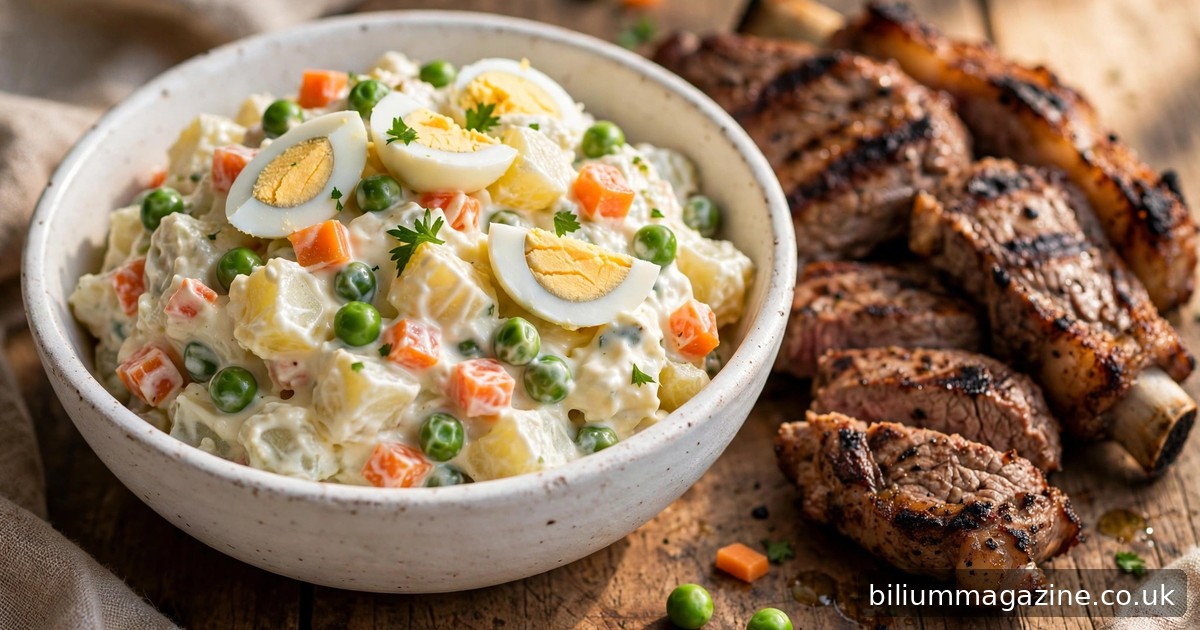
Best Ensalada Rusa Argentina Near Me: Where to Find It
Search best ensalada rusa argentina near me and you’ll wade through generic Russian-salad recipes that miss the entire point. Because in Argentina, ensalada rusa isn’t really Russian anymore — it’s Argentine. It’s the cold, creamy potato salad that sits next to the asado every single Sunday, the dish that anchors the Christmas table, the one Argentine expats describe with actual longing. Finding a great version means looking for Argentine kitchens specifically, not just any restaurant with a salad bar.
This guide explains what makes the Argentine version distinct (hint: it’s simpler than the Russian original and better for it), how to tell a great one from deli-counter mediocrity, where Argentine communities actually get theirs, and the home-style markers — waxy potatoes, real mayonnaise, the beet variant — that separate the memorable from the forgettable.
Quick Answer: Where to Find Ensalada Rusa Argentina Near You
Short on time? The Argentine version lives at Argentine parrillas (grill restaurants) and Argentine delis, then Latin American restaurants with Argentine connections, then Latin grocery deli counters — where house-made tubs are often excellent. Search reviews for “ensalada rusa” by name, and time your hunt for December: Argentine Christmas and New Year celebrations put this salad on catering menus everywhere, even at places that don’t serve it year-round. Ask specifically for the beet version (con remolacha) if you want the full traditional experience.
What Is Ensalada Rusa Argentina, Exactly?
Despite the name, ensalada rusa’s journey to Argentina is a story of immigration, not geography. The dish began in mid-19th-century Russia, created by Belgian chef Lucien Olivier at Moscow’s Hermitage restaurant — the original Olivier salad was a luxurious affair of grouse, caviar, crayfish, and a secret mayonnaise. As the recipe traveled across Europe, it shed its luxury ingredients and simplified. Italian and Spanish immigrants carried their versions to Argentina in the great migration waves, and there it completed its transformation: boiled potatoes, carrots, peas, hard-boiled egg, and mayonnaise, served chilled.
What Argentina did next is what matters. The salad stopped being a recipe and became an institution — as essential to the asado as the provoleta, as expected at Christmas as the vitel toné. Argentine families make it in enormous bowls; it’s the dish someone’s mother is famous for; arguments about the correct mayonnaise-to-potato ratio are a recognized domestic genre. It’s simple food given weight by ritual: the same five ingredients taste different when they’re part of a Sunday that started at noon and ends at dusk.
The classic Argentine formula: waxy potatoes boiled and diced, carrots diced, peas, hard-boiled egg, all bound with mayonnaise and served cold. Common additions include diced beets (remolacha) — which tint the whole salad a festive pink and add earthy sweetness — and sometimes olives or a little onion. That’s the whole canon. No apples, no pickles, no mustard-forward American twists: the Argentine version is defined as much by what it leaves out as what it includes.
Ensalada Rusa vs. Other Potato Salads: What’s Different?
Potato salad exists on every continent, and the Argentine version is easy to confuse with its cousins until you know the tells.
vs. American potato salad: The American deli version leans on mustard, pickle relish, celery, and paprika — tangy, crunchy, assertive. Ensalada rusa argentina is milder and creamier: mayonnaise-forward, no mustard bite, no pickle sharpness. If your salad crunches with celery, it’s not ensalada rusa.
vs. German potato salad: The German style (especially the southern vinegar-based one) is served warm with a bacon-vinegar dressing and no mayonnaise at all. Ensalada rusa is always mayonnaise-based and always served chilled. They’re barely the same dish.
vs. Russian Olivier salad (the original): Modern Russian Olivier still typically includes pickles, sometimes sausage or chicken, and occasionally apple — a busier, more composed salad. The Argentine version stripped it down to the essentials and perfected the simplicity. Ironically, many Argentines would find the Russian original overcomplicated.
vs. other Latin American versions: Peru, Venezuela, Colombia, and the Dominican Republic all have their ensalada rusa, and they’re siblings — but the Argentine one is distinguished by its asado-and-Christmas centrality, the remolacha variant’s popularity, and a particular mayonnaise loyalty (more on that below). Order ensalada rusa at a Venezuelan restaurant and you’ll get something delicious but different; the Argentine specificity is what this guide is about.
What Makes a Great Ensalada Rusa Argentina — and a Bad One
This is a dish with five ingredients and nowhere to hide. Excellence is entirely about execution.
Waxy potatoes, cut right. The potato choice is the foundation: waxy varieties (Yukon Gold is the widely available ideal) that hold their shape when boiled and diced. Floury potatoes disintegrate into paste and turn the salad to mush — the single most common failure. The dice should be even, roughly pea-to-marble-sized, so every spoonful has the same composition. Great ensalada rusa has texture: distinct cubes, not mash.
Real mayonnaise, properly proportioned. This is the great Argentine debate. Traditionalists insist on full-fat mayonnaise — and many Argentine families have fierce brand loyalties forged in childhood. The mayonnaise should coat, not drown: every cube glossed, none swimming. Too little and the salad is dry and sad; too much and it’s soup. A great version tastes creamy but still lets the potato come through.
Vegetables with integrity. Carrots diced to match the potatoes, peas that are actually green (not the grey-green of a can opened last week), egg cooked just to set — no green-ringed yolks. The beet version should use beets cooked until tender and diced fine; they should tint and sweeten, not dominate.
Served properly cold. Ensalada rusa is a chilled salad, and temperature is a quality signal. Lukewarm ensalada rusa at a buffet has been sitting too long — and with mayonnaise involved, that’s a food-safety concern as well as a flavor one. The best versions taste like they came from the refrigerator an hour ago, because they did.
Made fresh, in reasonable batches. The finest ensalada rusa is made the same day or the day before — the flavors need a few hours to marry, but after two or three days the texture degrades. Ask a deli or restaurant when the batch was made; a good vendor answers without hesitation. Evasion is an answer too.
How to Find the Best Ensalada Rusa Argentina Near Me
Unlike restaurant-only dishes, ensalada rusa hides in delis, catering trays, and holiday menus — which means the search covers more ground than usual.
Step 1: Search for Argentine restaurants and parrillas first. Type “Argentine restaurant near me” or “parrilla near me” into Google Maps. Argentine grill restaurants serve ensalada rusa as a standard side — it’s part of the asado spread, not a special. Check the menu or photos for it; parrilla menus often list sides plainly, and diner photos of the full asado spread will show the salad bowl.
Step 2: Check Argentine and Latin delis. This is the sleeper source. Latin American grocery stores with deli counters — especially ones serving Argentine or broader Southern Cone communities — frequently sell house-made ensalada rusa by weight. The quality at a well-run neighborhood deli often rivals restaurants, because the person making it learned the recipe at home. Look for delis where the tub is labeled simply and the color looks fresh; ask when it was made.
Step 3: Search reviews for the exact dish name. “Ensalada rusa” in review text is high-signal — diners mention it when it’s notably good or notably bad. At Argentine restaurants, also search for “asado” reviews that describe the sides; the salad gets praised in the context of the full spread.
Step 4: Time it for December. Christmas and New Year are ensalada rusa’s high season in Argentina — it’s as mandatory on the holiday table as turkey is elsewhere. Argentine restaurants, delis, and caterers abroad follow the same rhythm: December brings catering trays, holiday specials, and the beet version in force. If your search comes up thin in October, try again in December.
Step 5: Ask the community. Argentine expat communities are tight-knit and food-opinionated. Local Argentine social-media groups, cultural centers, and churches are where you’ll learn which deli makes it like home and who’s taking Christmas orders. Home cooks taking holiday orders — a real tradition — often produce the most authentic versions of all, since they’re cooking for their own families’ standards.
Step 6: Don’t overlook the catering angle. Some of the best ensalada rusa is never served in a restaurant at all — it’s made by catering operations and home cooks for events. If a Latin caterer in your area lists Argentine food, ask whether ensalada rusa is available by the tray. For a party, this is often better and cheaper than any restaurant option.
Anyone who hunts specific dishes regularly will recognize the method: our guide to finding the best restaurants near you covers the review-reading approach in more detail — searching the dish name inside reviews is what surfaces the delis and caterers that category searches miss.
What to Expect: Price and Timing
As a side dish, ensalada rusa is one of the more affordable items on any Argentine menu — typically a few pounds or dollars as a side portion, or sold by weight at delis for roughly the price of any prepared salad. At a parrilla, it often arrives as part of a mixed-salad spread with the asado. Catering trays for holidays are priced by size; for a Christmas order, expect to pay for the convenience, not the ingredients — the components are humble, the labor and tradition are what you’re buying.
Timing follows the Argentine calendar: year-round at parrillas (it’s an asado staple), with a massive December peak for Christmas and New Year. The beet version (con remolacha) is especially associated with the holidays — its pink color reads as festive on the Christmas table. Summer asado season (December–February in the Southern Hemisphere, June–August in the north) keeps it in steady rotation wherever Argentine grilling happens.
The Homemade Shortcut: Argentine-Style in 30 Minutes
Ensalada rusa is genuinely one of the easiest Argentine dishes to make at home — and homemade, eaten the next day, beats most deli versions. Argentine families would consider this barely a recipe; it’s a procedure.
What you need (serves 6–8 as a side):
- 1 kg waxy potatoes (Yukon Gold or similar — not floury baking potatoes)
- 2–3 carrots
- 1 cup peas (frozen is fine; fresh is better)
- 3 hard-boiled eggs
- 1 cup good full-fat mayonnaise, plus more to taste
- Salt, and a squeeze of lemon juice (optional but traditional in some families)
- For the remolacha version: 2 medium beets, boiled until tender, peeled and diced
The method: Boil the potatoes whole or halved in salted water until just tender — a knife meets slight resistance. (Boiling before dicing keeps them from waterlogging and falling apart.) Boil carrots separately until tender-crisp; cook peas briefly. Cool everything completely — warm potatoes melt the mayonnaise into grease, the classic beginner error. Dice potatoes and carrots into even cubes, chop two of the eggs, and combine with peas, mayonnaise, and salt. For con remolacha, fold in the diced beets last — they’ll tint everything a beautiful pink. Top with the remaining egg, sliced or quartered, cover, and refrigerate at least 4 hours or overnight. Taste before serving and adjust salt and mayonnaise.
Three honest notes from Argentine kitchens: don’t use floury potatoes — this is the rule that matters most. Chill it properly — it’s a cold salad, and serving it at room temperature is the fastest way to make it taste wrong. And make it ahead — unlike most salads, ensalada rusa improves overnight as the flavors marry. Day-two ensalada rusa is the real thing; day-one is the preview.
The Christmas Table: Vitel Toné and Company
Something most English-language recipes skip: in Argentina, ensalada rusa doesn’t stand alone in December. It’s part of a specific holiday ensemble, and understanding the ensemble explains the dish’s status.
The centerpiece is vitel toné — cold sliced veal (or beef) in a tuna-caper-mayonnaise sauce, another Italian-immigrant inheritance that Argentina adopted as Christmas law. Alongside it: ensalada rusa (often the beet version, for color), maybe a Waldorf-style salad, and the asado or cold meats. It’s a cold table, designed for Argentine December heat — Christmas in summer, eaten slowly over a long afternoon.
Why does this matter for your search? Because restaurants and delis that do the full Argentine Christmas spread — vitel toné and ensalada rusa — are the ones operating at the deepest level of tradition. If you find a deli taking December orders for vitel toné, order the ensalada rusa from the same place. And if you’re ever invited to an Argentine Christmas, bring nothing; just show up hungry and watch how seriously they take the potato salad. You’ll never look at a deli tub the same way again.
Frequently Asked Questions
Why is it called Russian salad if it’s Argentine?
The recipe originated in 19th-century Russia with chef Lucien Olivier, traveled across Europe shedding its luxury ingredients, and arrived in Argentina with Italian and Spanish immigrants — where it was adopted so completely that it became a national dish. The name is history; the identity is Argentine.
What is ensalada rusa con remolacha?
The beet version: diced cooked beets folded through the classic potato-carrot-pea-egg-mayonnaise base, tinting it pink and adding earthy sweetness. It’s especially traditional at Christmas, where the color reads as festive. Many Argentines consider it the definitive version.
Is Argentine ensalada rusa the same as Olivier salad?
Related but not the same. Modern Olivier salad (Russian or Eastern European) typically includes pickles and often sausage, chicken, or apple — a busier composition. The Argentine version is simpler: potato, carrot, peas, egg, mayonnaise, optionally beet. Same ancestor, different evolution.
How long does ensalada rusa keep?
Three to four days refrigerated, and the flavor is best on day two after the ingredients have married. Because it’s mayonnaise-based, it should never sit at room temperature for more than two hours — a real consideration at summer asados, where the bowl should go back in the fridge between servings.
Should it be served warm or cold?
Cold, always. It’s a chilled salad by definition, and serving temperature is a quality marker — lukewarm ensalada rusa has either been sitting out too long or was never properly chilled. The cold temperature is part of what makes it refreshing next to hot grilled meats.
Can I use light mayonnaise?
You can, but Argentine traditionalists would stage an intervention. Full-fat mayonnaise gives the salad its characteristic richness and mouthfeel; light versions can taste thin and slightly sweet. If you’re going to make it, make it properly — it’s a celebration dish, not a diet food.
The Takeaway
The search for the best ensalada rusa argentina near me ends where Argentine food culture lives: the parrilla’s side spread, the neighborhood deli’s fresh tub, the December catering tray. Judge it the Argentine way — waxy potatoes holding their dice, real mayonnaise in the right proportion, served properly cold, ideally with beets turning it festive pink. It’s five humble ingredients that immigrants carried across an ocean and a country turned into a ritual. The best version near you is the one made by someone who grew up with it — and now you know exactly how to find them.
