

Best Dulce de Leche Pancakes Near Me: A Complete Guide
If you’ve been searching for the best dulce de leche pancakes near me, you’re chasing one of breakfast’s great pleasures: the moment a warm, golden pancake meets dulce de leche — that slow-cooked milk-and-sugar caramel with the glossy sheen of toffee and the depth of browned butter. It’s richer than maple syrup, silkier than caramel sauce, and when it’s done right, it turns a simple stack into something you’ll think about for days.
But here’s what most pancake roundups won’t tell you: “dulce de leche pancakes” can mean two very different dishes. An American diner might serve a thick buttermilk stack with a dulce de leche drizzle and whipped cream. An Argentine café will serve thin panqueques — crepes, really — rolled around a warm ribbon of the real thing. Both are delicious. Knowing which one you’re in the mood for changes where you should look.
This guide sorts it out: what the dish actually is, how to tell a great version from a lazy one, how to track down the best plate near you, what it should cost in 2026, and how to make a worthy version at home with a store-bought jar.
What Are Dulce de Leche Pancakes, Exactly?
Dulce de leche itself is the soul of the dish. The name translates from Spanish as “sweet of milk,” and that’s precisely what it is: milk and sugar, cooked slowly over low heat until the water evaporates, the sugars caramelize, and the whole thing thickens into a spread the color of dark amber. The texture should be smooth and spoonable — somewhere between caramel sauce and fudge. The flavor is toasted, milky, almost butterscotch-like, but with a complexity that jarred caramel sauce can’t touch.
Argentina claims it as a national treasure, and Uruguay does too; similar milk sweets appear across Latin America under names like cajeta in Mexico and manjar in Chile. The Argentine version is the reference point for this dish because Argentina is where panqueques con dulce de leche became a fixture — thin, buttery crepes served at breakfast, at merienda (the afternoon snack hour), and as street food.
When American brunch menus borrow the pairing, they usually adapt it to the local stack: thick, fluffy buttermilk pancakes with a dulce de leche sauce poured over the top. The Miami café Cafe Bastille, for instance, serves three dulce de leche pancakes with a dulce de leche glaze, bananas, and a cookie crumble. In San Antonio, the Sugar Factory tops buttermilk pancakes with dulce de leche sauce, candied pecans, whipped cream, and strawberries. Same sweetener, very different architecture.
Panqueques vs. Pancakes: Two Ways to Serve Them
This is the fork in the road that decides your search, so it’s worth two minutes.
The Argentine panqueque is thin — a crepe made from a loose batter of flour, milk, eggs, and melted butter, cooked in seconds on a hot pan until it’s lacy at the edges and faintly golden. It’s served rolled or folded around warm dulce de leche, sometimes with sliced banana tucked in. In Buenos Aires, you’ll find them at corner cafés as well as dedicated spots, often with a dusting of powdered sugar or a drizzle of extra sauce on top. The appeal is the ratio: a thin shell of eggy pancake around a molten core. Because the crepe is so thin, the dulce de leche is the star, and a good one stays pourable when warmed.
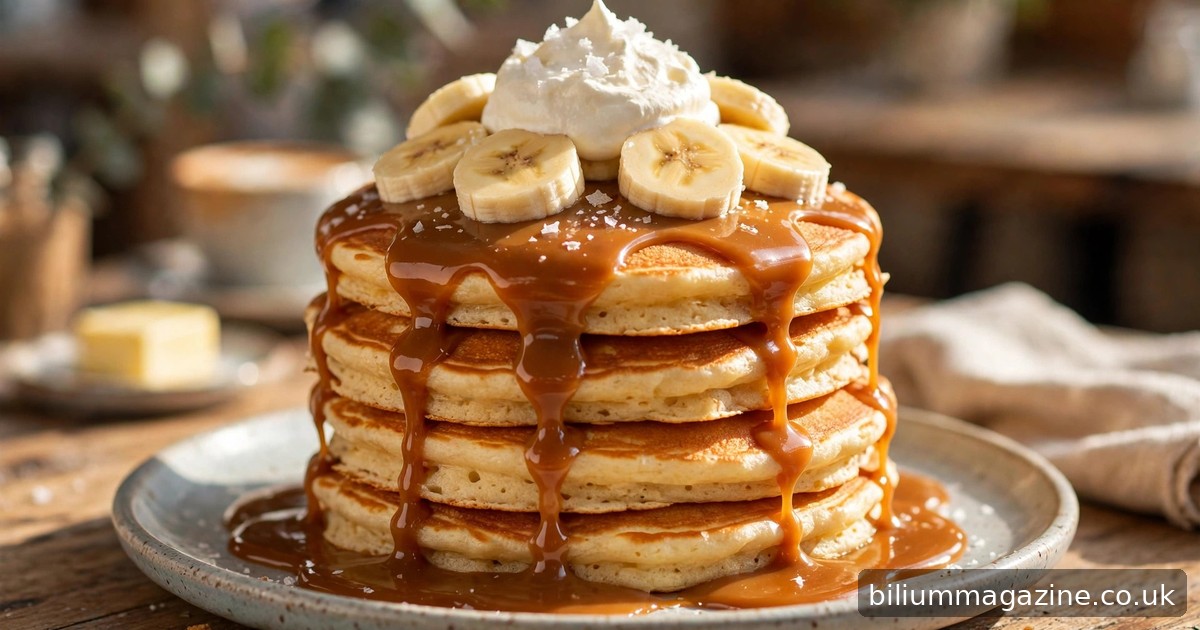
The American dulce de leche pancake is the brunch stack: three or four thick buttermilk pancakes, usually topped with a warmed dulce de leche sauce, fresh fruit, whipped cream, and some kind of crunch — candied pecans, cookie crumble, or toasted nuts. It’s a more maximalist plate, built for the photos-first brunch crowd. There’s nothing wrong with it; a great one is genuinely superb. But the pancake-to-sauce ratio means the batter matters more here — if the pancakes are dry or gummy, no amount of dulce de leche will save them.
Neither is “correct.” Decide which you want, then search accordingly: Latin American or Argentine cafés for the thin style, brunch spots and American diners for the stack.
What Makes a Great Dulce de Leche Pancake
Great dulce de leche pancakes share a few non-negotiables, regardless of style.
- Real dulce de leche, warmed. It should taste of caramelized milk — nutty, toasty, not just sweet. A thin golden drizzle that tastes like pancake syrup with a tan is a red flag. Ask if it’s house-made or which brand they use; the good places will tell you proudly.
- The right temperature contrast. Warm sauce on warm pancakes. Cold dulce de leche straight from a jar seizes up and sits like glue. A kitchen that takes the dish seriously warms the sauce so it flows.
- Pancakes cooked to order. A thick stack should be fluffy in the middle with crisped butter edges — not steamed and rubbery from sitting under a heat lamp. Thin panqueques should be pliable and just browned, never brittle.
- Thoughtful extras, not clutter. Banana is the classic partner — its mild sweetness and soft texture belong with dulce de leche. Candied pecans or hazelnuts add crunch; whipped cream adds coolness. But a plate buried under six toppings is hiding something.
- Salt. A pinch of flaky sea salt — Maldon is the fashionable choice, and one well-known Montreal brunch spot uses it — is what separates good from memorable. Sweetness without salt is one-dimensional.
The single most telling detail: how the dulce de leche behaves. Spooned warm onto a plate, it should spread slowly and glossily, with a shine like polished wood. If it sits in a stiff mound, it wasn’t warmed properly — or it isn’t really dulce de leche at all.
How to Find the Best Dulce de Leche Pancakes Near Me
Because this dish lives at the intersection of Latin American cafés and American brunch culture, a single Google search often misses half the options. Here’s a practical method.
Start with two searches, not one. Search “dulce de leche pancakes” for the brunch-stack style and “panqueques con dulce de leche” or “Argentine café near me” for the thin-crepe style. Many Argentine and Uruguayan cafés serve panqueques without listing them under the English keyword, so you’ll miss them with only one query.
Read reviews for specifics. Search within reviews for “dulce de leche” rather than trusting star ratings. You’re looking for comments about the sauce — warm, generous, real — not generic praise for the brunch. A reviewer who says “the dulce de leche was lukewarm and thin” just told you more than forty five-star ratings without specifics. Our guide to finding the best restaurants near you covers the review-reading method in more detail, including how to spot reviews that mention the same dish over multiple visits.
Check the menu photos. Real dulce de leche has a distinctive look: deep amber, glossy, flowing. If every photo of the dish shows a pale, thin drizzle, that’s caramel-flavored syrup, and you can keep scrolling. Conversely, a stack drowned in a thick dark sauce with banana and crumble on top is a strong sign.
Call Argentine and Uruguayan bakeries. Bakeries from the Río de la Plata region often sell dulce de leche by the jar and serve panqueques at the counter — but their websites may be Spanish-only or nonexistent. A quick phone call beats ten minutes of frustrated Googling. Ask specifically: “¿Tienen panqueques con dulce de leche?”
Watch for seasonality. Some brunch spots rotate dulce de leche pancakes as a special rather than a permanent menu item — Cafe Bastille’s version was introduced as a new item, for instance. If your first-choice spot doesn’t have it today, ask whether it comes back seasonally before giving up on them.
What to Expect: Prices and Timing
As of 2026, expect to pay $16–$25 for a dulce de leche pancake plate at a mid-range American brunch restaurant. The Sugar Factory’s version sits around $16; fancier downtown spots like Cafe Bastille charge around $23 for a composed plate with glaze, banana, and crumble. Argentine café versions tend to run cheaper — often $8–$14 — because the dish is simpler and the setting more casual.
Timing matters. These are overwhelmingly a morning and brunch dish. Most kitchens stop serving pancake plates by mid-afternoon, and Latin cafés may serve panqueques all day but make their best batch fresh in the morning. Weekend brunch rushes (10 a.m.–1 p.m.) are the worst time to judge a place — show up on a weekday if you can, when the cook has time to warm the sauce properly and plate with care.
Making Them at Home: The Store-Bought Shortcut
If the search comes up empty where you live, this is one dish where the homemade version can genuinely rival a restaurant plate — because the hard part, the dulce de leche, can be bought.
Buy a good jar. Look for Argentine brands at Latin grocery stores — La Lechera (Nestlé) is the widely available entry point and perfectly serviceable; Argentine brands like La Serenísima or Chimbote are worth seeking out if your market stocks them. Check the ingredient list: milk and sugar should be the first ingredients. If corn syrup leads, put it back.
Warm the sauce. Scoop what you need into a small pan with a spoonful of milk or cream and warm it gently, stirring, until it flows like thick caramel. Never microwave it directly in the jar’s metal lid — decant first, obviously — and don’t let it boil, or it will seize.
Pick your pancake style. For the Argentine version, use a crepe batter (roughly 1 cup flour, 2 eggs, 1¼ cups milk, 2 tablespoons melted butter) cooked thin in a nonstick pan. Spread each warm crepe with a tablespoon or two of warmed dulce de leche, roll it up, and serve with sliced banana. For the American stack, make your favorite buttermilk pancakes, stack three, pour over a generous amount of the warm sauce, and finish with bananas, whipped cream, and a pinch of flaky salt.
Total time: about 25 minutes, most of it pancake-making. Cost: a fraction of the restaurant price.
Frequently Asked Questions
Are dulce de leche pancakes different from caramel pancakes?
Yes. Caramel is sugar (and often cream) cooked to a candy; dulce de leche is milk and sugar cooked together until the milk proteins brown and thicken. Dulce de leche tastes milky, toasty, and slightly less aggressively sweet than caramel. If your pancakes arrive with a pale yellow syrup, that’s caramel or butterscotch — not dulce de leche.
Where can I get dulce de leche pancakes near me?
Start with Argentine or Uruguayan cafés for the thin panqueque style and brunch restaurants for the thick-stack style. Search both “dulce de leche pancakes” and “panqueques con dulce de leche” — many Latin cafés use only the Spanish term. Latin bakeries sometimes serve them at the counter even without a formal brunch menu.
Can I make dulce de leche pancakes at home?
Easily. The dish is forgiving because the star ingredient comes from a jar. Warm good-quality dulce de leche with a splash of milk until pourable, make your preferred pancakes (thin crepes or thick buttermilk), and assemble. Bananas and a pinch of salt are the finishing touches that make it taste restaurant-made.
What’s the best store-bought dulce de leche for pancakes?
Any Argentine-style jar where milk and sugar are the main ingredients. La Lechera is the easiest to find in US supermarkets. For the closest thing to the real Buenos Aires flavor, seek out Argentine brands at Latin markets — they’re usually thicker and toastier than the mass-market versions.
Are dulce de leche pancakes gluten-free?
Not by default — both the pancakes and most thickeners in commercial dulce de leche contain wheat or cross-contact risk. A few brunch spots offer gluten-free pancake batter with dulce de leche topping, but you’ll need to ask; it’s not common. Homemade is the safest route, using a gluten-free flour blend and a certified gluten-free jar.
How many calories are in dulce de leche pancakes?
A restaurant plate typically lands between 900 and 1,400 calories, with the dulce de leche itself contributing roughly 120–150 calories per two-tablespoon serving plus significant sugar. It’s a treat meal, not a daily breakfast. Splitting a plate is the sensible move at brunch.
The Takeaway
The best dulce de leche pancakes near me aren’t just the highest-rated brunch stack — they’re the plate where warm, real dulce de leche meets pancakes cooked to order, with banana and a pinch of salt doing the supporting work. Decide whether you want the Argentine panqueque or the American stack, search for both by name, and judge by the sauce: deep amber, glossy, and flowing. If you can’t find the dish locally, a jar of good dulce de leche and twenty-five minutes will get you remarkably close to the real thing at home.
