

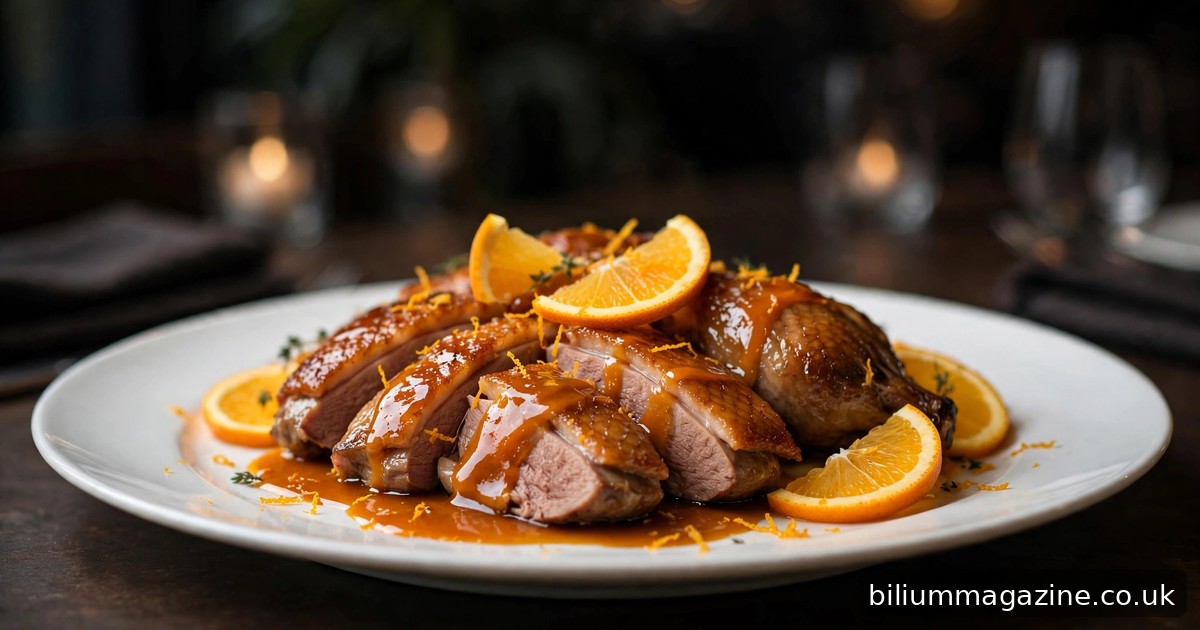
Best Duck à l’Orange Near Me: Where to Find This French Classic
Typing best duck a l’orange near me into Google usually gets you a mixed bag: chain restaurants that don’t serve anything close to it, listicles with menus from 2019, and blog posts that never actually name a real place. Frustrating, when you’re craving something this specific.
Duck à l’orange isn’t a dish you stumble into. It’s classical French cooking — roasted duck with a bitter-orange sauce — and it survives today only in kitchens that still take technique seriously. This guide explains what the dish actually is, why it’s gotten so hard to find, how to track down a genuinely good version near you, and what to do when no restaurant within driving distance serves it.
Quick Answer: Where to Find the Best Duck à l’Orange Near You
Short on time? Here’s the fast version: duck à l’orange lives at classic French bistros, brasseries, and fine-dining rooms — not at casual restaurants. Search Google Maps or Yelp for the exact dish name (“duck a l’orange”), not just “French restaurant,” then call ahead, because it often appears as a seasonal special rather than a permanent menu item. In the UK, supermarket ready-meals (Gressingham’s duck à l’orange is widely stocked) are a surprisingly decent backup.
What Is Duck à l’Orange, Exactly?
At its core, it’s simple: a roasted duck served with a sauce built from orange. The classic French version — canard à la bigarade — uses bitter Seville oranges, sugar, vinegar, and stock reduced into a gastrique: tart, lightly sweet, savory, and glossy. A splash of orange liqueur like Grand Marnier or Cointreau often finishes it. The duck itself should have shatteringly crisp skin and meat cooked to a rosy medium.
The dish’s history is older and stranger than most menus suggest. Food historians trace the meat-with-fruit idea back to ancient Persia, and the French version grew out of Renaissance-era cooking. One popular story says Catherine de’ Medici brought the recipe from Florence when she married the future Henry II of France in 1533 — though historians still debate that one. What’s certain: the first published recipe appeared in 1813, Auguste Escoffier codified it in Le Guide Culinaire, and it became the emblem of classical French cooking — the dish that proved a kitchen knew what it was doing.
In America, Julia Child made it famous. Her Mastering the Art of French Cooking (1961) put duck à l’orange in home kitchens across the country, and for two decades it defined “fancy dinner.” Then came the backlash: by the 2000s it was dismissed as dated — Gordon Ramsay called it “the culinary equivalent of flared trousers.” Chefs moved on to duck confit and seared magret, and the dish quietly vanished from most menus.
Here’s the thing, though: the dish was never the problem. Bad versions were. A generation of restaurants served it too sweet and gloppy, made with bottled orange juice and cornstarch instead of a real gastrique. The current revival — bistros bringing back the classics, done properly — is the dish getting the second chance it deserves.
Duck à l’Orange vs. the Other Ducks on the Menu
Half the confusion around this dish comes from menus. “Duck” can mean four completely different things, and only one of them is what you’re looking for.
Duck à l’orange is roasted — whole or in parts — with crisp skin and that orange gastrique. The flavor is rich, citrusy, and savory-sweet all at once.
Duck confit is a different animal entirely: duck legs cured in salt, then cooked low and slow submerged in their own fat until the meat falls off the bone. No orange involved. If a bistro lists “duck” and it’s confit, don’t expect l’orange.
Peking duck is air-dried and roasted for ultra-crisp skin, served in thin slices with pancakes and hoisin sauce. Chinese technique, completely different flavor profile.
Seared duck breast (magret) is pan-seared like a steak, sliced pink, usually with a berry, peppercorn, or wine sauce. Many modern French restaurants serve this and call it a day — it’s easier and faster than a whole roast.
Knowing the difference matters because it changes your search. If you ask a restaurant “do you serve duck?” you’ll get confit nine times out of ten. Ask for duck à l’orange by name.
Why Is It So Hard to Find?
It’s not your imagination — the dish really is disappearing. A few reasons why.
First, it costs real money to execute. Whole ducks aren’t cheap, and the dish demands attention: scoring the skin, rendering the fat slowly, building a gastrique from scratch. A rushed version has rubbery skin and a sauce that tastes like marmalade. Most kitchens can’t justify that labor for a dish that isn’t a guaranteed seller.
Second, the technique is genuinely classical. Making a gastrique — caramelizing sugar, deglazing with vinegar, reducing with stock and citrus — is old-school saucier work. Plenty of talented modern line cooks were never trained in it.
Third, tastes moved on. When every bistro pivoted to small plates and seared duck breast, the whole-roast classics got squeezed off menus. The restaurants that kept duck à l’orange are the ones built around traditional French cooking in the first place: neighborhood bistros, brasseries, and hotel dining rooms with an older, loyal clientele.
How to Spot a Great One — and a Bad One
Not every plate labeled “duck à l’orange” deserves your money. Before you order, know what you’re looking for.
Crisp, rendered skin. The skin should shatter slightly under your fork — golden, not pale or chewy. Greasy, flabby skin means the kitchen rushed the rendering. This is the single biggest tell.
Meat at medium, not well-done. Duck breast dries out fast past medium. A kitchen that respects the dish treats the breast like a good steak: pink in the center.
A balanced sauce. This is where most versions fail. A real gastrique is tart first, sweet second, with savory depth from the stock. If it tastes like orange jam poured over meat, they took a shortcut.
Real citrus. Fresh zest and juice give a bright, almost floral note. Bottled concentrate makes the sauce flat and syrupy.
Red flags on a menu: “orange glazed duck” (usually a sweet glaze, not a gastrique), no mention of how the duck is cooked, or a suspiciously low price. A proper duck à l’orange at a restaurant typically runs $28–$55 depending on the city — if it’s $16, something’s off.
How to Actually Find It Near You
Generic searches fail because Google indexes restaurant categories, not dishes. Work the problem differently.
Search the exact dish name. Type “duck a l’orange” (or “canard a l’orange”) into Google Maps or Yelp — not “French restaurant near me.” Menu pages and reviews mention the dish by name; category listings don’t.
Target the right restaurant types. Classic French bistros first, then brasseries, then fine-dining rooms with French-trained chefs, then hotel restaurants in major cities. Skip fusion spots and wine bars — if they serve duck there, it’s confit or magret.
Call ahead. This is the step everyone skips, and the one that matters most. Duck à l’orange frequently appears as a fall/winter seasonal special or a weekend-only item that never makes it onto the website. A two-minute phone call — “Do you have duck à l’orange on the menu right now?” — saves a wasted trip.
Read recent reviews, not just menus. Reviews reflect what’s actually being served this month. Search reviews for “duck” and look at diner photos — people photograph standout dishes even when the menu buries them.
If you’re the type who hunts down the best version of every dish, our guide to finding the best restaurants near you covers the review-reading method in more detail — the same approach works for any hard-to-find dish.
The UK Shortcut: Great Duck à l’Orange Without the Hunt
Here’s something most guides won’t tell you: in the UK, you can buy a genuinely respectable duck à l’orange at the supermarket. Gressingham — the Suffolk-based duck producer — sells a bistro-style duck à l’orange (slow-cooked duck legs with orange sauce) through major supermarkets and delivery apps. It’s not going to beat a great bistro, but the duck is properly reared, the sauce is balanced rather than candy-sweet, and 40 minutes in the oven gets you most of the way there for a fraction of the restaurant price.
And if you want the full experience at home, the dish is more approachable than its reputation suggests. The non-negotiables: dry the duck thoroughly and rest it uncovered in the fridge overnight (this is what makes the skin crisp), score the fat without cutting into the meat, roast low enough to render before crisping, and build the gastrique separately — caramelize sugar to amber, deglaze with red wine vinegar, add fresh orange juice and zest plus good stock, then reduce until it coats a spoon. Julia Child’s original recipe from Mastering the Art of French Cooking still holds up as the reference; modern versions mostly simplify her method rather than improve it.
Honest advice: if you’ve never had the dish, eat it at a restaurant first. You need the baseline — what crisp skin and a balanced gastrique actually taste like — before you can judge your own attempt.
What It Costs and What to Order With It
At a restaurant, expect $28–$55 for the entrée in most cities, more at fine-dining rooms. The price reflects the duck itself plus the labor — it’s one of the more expensive items on any bistro menu, and that’s normal.
For wine, the classics work for a reason: a Pinot Noir or red Burgundy has light enough tannins to complement the duck’s richness without fighting the citrus. An off-dry Riesling is the sleeper pick — its slight sweetness echoes the orange sauce. On the plate, keep sides simple: potato gratin, haricots verts, or wild rice. Anything that competes with the citrus is a mistake. And skip a citrus dessert afterward — after orange sauce, order the crème brûlée or something chocolate.
Duck à l’Orange FAQs
Is duck à l’orange the same as “orange duck” at a Chinese restaurant?
No. Chinese-American orange duck is typically breaded, fried, and glazed with a sweet sauce. Duck à l’orange is roasted, never breaded, with a savory-tart French gastrique. Different cuisine, different technique, different dish.
Why do some menus call it “canard à l’orange”?
Canard is simply French for duck — it’s the same dish. Menus that use the French name are usually signaling a more traditionally trained kitchen, though the name alone guarantees nothing.
Is it always served with the skin on?
Almost always, and it should be — crisp skin is central to the dish. A skinless “duck à l’orange” is usually a shortcut, and it’ll be missing half the texture that makes the dish work.
Can I ask a restaurant to make it if it’s not on the menu?
At a chef-driven French restaurant, it doesn’t hurt to ask — but don’t count on it. The dish needs prep (rendering, gastrique) that a kitchen won’t have ready on a random Tuesday. Your odds are far better calling ahead about a seasonal special.
What’s the difference between duck à l’orange and duck à la bigarade?
Bigarade is the original: made with bitter Seville oranges, which have a short season (roughly December to February). Modern duck à l’orange usually approximates that sour edge with sweet orange juice plus lemon juice or vinegar. If you see “bigarade” on a menu in winter, order it — that’s the dish in its oldest form.
Is duck à l’orange hard to make at home?
Moderate, not impossible. The technique is straightforward — dry skin, slow rendering, a gastrique — but it takes 2–3 hours and there’s no shortcut for the skin. Most home cooks fail by roasting too hot too fast. Low and slow first, then crisp at the end.
The Bottom Line
Finding a great duck à l’orange takes a little more effort than a quick search, but that effort is the point. The restaurants still serving it — the bistros rendering skin low and slow, building gastriques from scratch — tend to be the ones that care most about getting things right. Search the dish by name, call ahead, check recent reviews, and don’t ignore the supermarket shortcut when the craving hits on a weeknight. Once you’ve had a properly executed version — crisp skin, tart-savory sauce, meat at a rosy medium — you’ll understand why this dish survived 500 years of changing tastes.
