

Best Crema Catalana Near Me: Where to Find It
Search best crema catalana near me and you’ll get two kinds of results: Barcelona travel guides listing the same five cafés, and dessert pages that treat it as “the Spanish crème brûlée.” Neither helps much if you’re sitting in Manchester, Chicago, or Sydney, craving that crackling sugar crust over silky citrus-and-cinnamon custard, and wondering which restaurant within driving distance actually makes it properly.
This guide is for that searcher. It explains what crema catalana really is (and isn’t), how to tell a great one from a lazy crème brûlée in disguise, where to look outside Catalonia, and the one time of year when finding it gets dramatically easier. You’ll also learn why March matters more than any review site for this particular dessert.
Quick Answer: Where to Find Crema Catalana Near You
Short on time? Crema catalana lives at Catalan and Spanish restaurants with a real dessert program, then tapas bars with a proper dessert menu, then Mediterranean restaurants with a genuine Spanish focus. Search Google Maps or review sites for the exact dessert name — not just “Spanish restaurant” — and call ahead, because it’s often a rotating dessert rather than a permanent menu fixture. Around Saint Joseph’s Day (March 19), availability spikes at Spanish establishments marking the occasion. Spanish bakeries and pastry shops sometimes sell it prepared, and as a last resort, it’s one of the most achievable restaurant desserts to make at home.
What Is Crema Catalana, Exactly?
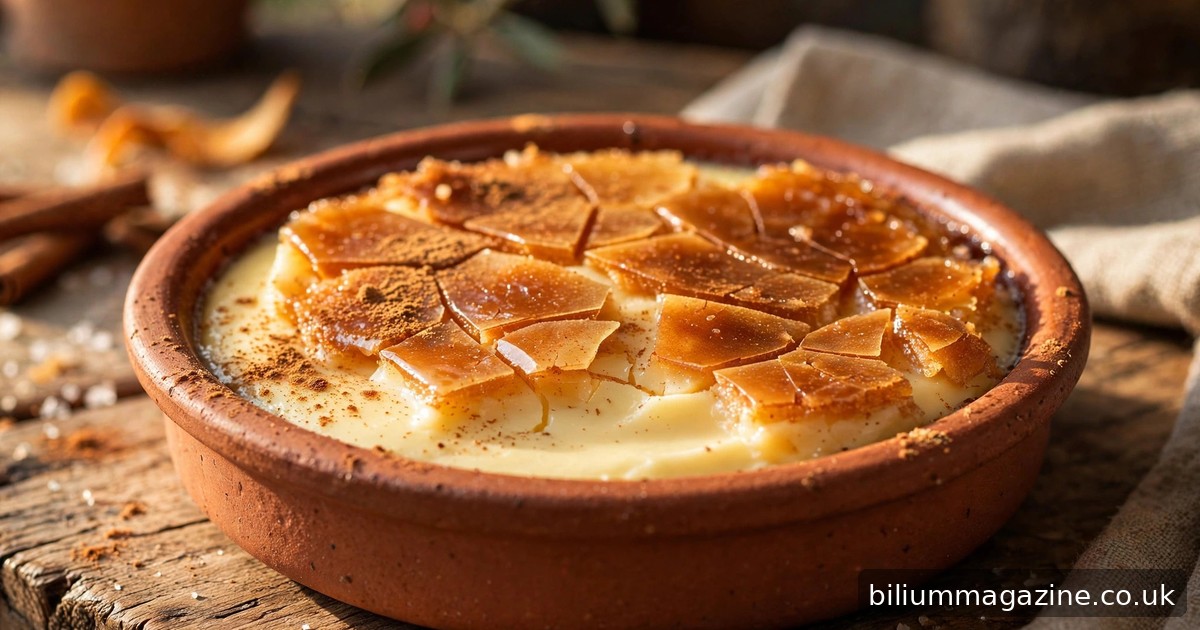
Crema catalana is Catalonia’s signature dessert: a chilled custard made from milk, egg yolks, sugar, lemon zest, and cinnamon, served in a shallow dish with a layer of sugar caramelized on top into a glassy, crackling crust. Its full traditional name is crema de Sant Josep — Saint Joseph’s cream — because March 19, Saint Joseph’s Day, is the dessert’s traditional feast day and also Father’s Day in Catalonia. For centuries, it was the dessert Catalan families made to mark the occasion.
The roots run deep. Food historians trace crema catalana back to the Middle Ages, making it one of Europe’s oldest custard desserts — arguably older than its famous French cousin. The method is stovetop, not oven: milk is infused with lemon peel and a cinnamon stick, whisked with egg yolks, sugar, and cornstarch, then cooked gently like a pastry cream until it thickens. It’s poured into wide, shallow terracotta dishes, chilled until set, and only at the very last moment is sugar scattered over the top and torched (traditionally with a hot iron) into that shattering amber shell.
That sequence — chill first, caramelize last — is non-negotiable. The contrast between cold, silky custard and warm, brittle sugar is the entire point of the dessert. A crema catalana served at room temperature with a soft, weeping sugar layer has missed the point the way a flat soufflé has missed its point.
Crema Catalana vs. Crème Brûlée: The Real Differences
This is the question behind almost every crema catalana search, and the answer is more substantial than most guides admit. They’re cousins, not twins:
Dairy: crema catalana uses milk; crème brûlée uses heavy cream.
Thickener: cornstarch plus egg yolks vs. eggs alone.
Cooking method: stovetop, like pastry cream, vs. baked in a water bath.
Flavoring: lemon zest and cinnamon vs. vanilla.
Texture: lighter, softer, silkier vs. denser, richer.
The practical upshot: crema catalana is a noticeably lighter dessert. Milk instead of cream and cornstarch instead of pure egg coagulation produce a softer, less dense custard — refreshing rather than indulgent. And the flavor profile is genuinely different: citrus and cinnamon give it a brightness and warmth that vanilla-scented crème brûlée doesn’t have.
Why does this matter for your search? Because some restaurants outside Spain list “crème brûlée” on the menu and serve something closer to crema catalana, or vice versa. If the dessert in front of you is light, lemony, and cinnamon-scented, you’re eating crema catalana regardless of what the menu calls it. If it’s dense, vanilla-heavy, and rich enough to coat your mouth, that’s brûlée. Knowing the difference lets you judge what you’re actually being served.
What Makes a Great Crema Catalana — and a Bad One
Most disappointing versions fail in predictable ways. Here’s the checklist to run through before you order — or while you’re eating.
The crack. Tap the sugar crust with the back of your spoon. It should shatter with an audible crack, breaking into glassy shards. A crust that bends, weeps, or has dissolved into syrup was torched too long ago (or never properly torched). This is the single biggest tell, and you can assess it in two seconds.
Citrus and cinnamon you can actually taste. A great crema catalana announces its flavorings: bright lemon zest, warm cinnamon, neither shy. Many restaurant versions outside Spain mute both into a generic sweet custard — often because the milk wasn’t properly infused. If it tastes like it could be any custard anywhere, the kitchen took a shortcut.
Silky, not gelatinous. The cornstarch set should give a soft, spoonable body — it should quiver slightly, not wobble like jelly and not stand up like panna cotta. Over-thickened versions (too much cornstarch, cooked too aggressively) turn gluey. Under-set versions swim in their dishes. The target is somewhere between a good pastry cream and a barely-set custard.
Served properly cold. Crema catalana is a chilled dessert, full stop. Lukewarm or room-temperature servings suggest it was made in a batch hours ago and left out — or worse, that the kitchen doesn’t know the dish. The cold custard against the freshly torched warm sugar is the contrast the whole dessert is built on.
The dish itself. Traditionalists serve it in wide, shallow terracotta cazuelitas — the broad surface maximizes the ratio of crackling crust to custard, which is exactly the ratio you want. A deep ramekin full of custard with a thin sugar lid is a crème brûlée serving vessel; it works, but the wide shallow dish is the authentic presentation and the better eating experience.
How to Find the Best Crema Catalana Near Me
Outside Catalonia, crema catalana is a sometimes-dessert, not a staple — which means the search strategy matters more than the search radius. Here’s how to work it.
Step 1: Search the exact dessert name. Type “crema catalana” into Google Maps, Yelp, or TripAdvisor — not “Spanish restaurant near me.” Restaurant categories won’t tell you which kitchens make it, but reviews and menu photos will: diners photograph the torched sugar crust, and reviewers mention it by name when it’s good. This one step eliminates 90% of wasted trips.
Step 2: Target Catalan and Spanish restaurants first. The most reliable source is a restaurant that identifies as Catalan or Spanish and runs a real dessert program — not a place where dessert is an afterthought. Tapas bars with a written dessert menu come next; many keep crema catalana as a rotating option. Mediterranean restaurants with a genuine Spanish focus (Spanish chef, Spanish wine list, jamón on the menu) are worth a look; generic “Mediterranean” spots usually aren’t.
Step 3: Call ahead and ask two questions. “Do you have crema catalana on the menu right now?” and “Is it made in-house?” The first question matters because it rotates — it’s labor-intensive, so smaller kitchens make it in batches or for weekends. The second matters because some restaurants buy in frozen desserts; a bought-in crema catalana can still be decent, but it won’t have the fresh-torch crack that defines the dish.
Step 4: Time it for March. This is the insider move. Because crema catalana is traditionally the dessert of Saint Joseph’s Day (March 19), Spanish restaurants, cultural centers, and bakeries are significantly more likely to feature it in March — some places that never serve it will make it as a special. If you’ve been putting off the hunt, put a reminder in your calendar for early March.
Step 5: Check Spanish bakeries and pastry shops. Some Spanish bakeries sell crema catalana prepared in individual dishes, especially around March. It’s also worth asking at Latin or Spanish grocery delis — the quality varies, but a bakery version made that morning beats a restaurant version made three days ago.
Step 6: Read the dessert reviews, not the overall rating. A Spanish restaurant can have excellent tapas and a mediocre pastry program. Filter reviews for dessert mentions specifically, and look at photos: you’re looking for that amber, glassy, freshly torched surface. A photo of a pale, matte sugar top is a warning sign.
If tracking down specific dishes is your hobby, our guide to finding the best restaurants near you covers the review-reading method in more detail — the same dish-name-first search strategy works for any specialty dessert that hides behind generic restaurant categories.
What to Expect: Price and Timing
At a Spanish restaurant, crema catalana typically sits in the standard dessert price band — think the same as any other house-made dessert on the menu, roughly £6–£9 in the UK or $8–$14 in the US as of 2026, depending on the city and the restaurant’s level. It’s rarely the most expensive dessert on the menu and shouldn’t be; the ingredients are humble (milk, eggs, sugar, lemon, cinnamon), and you’re paying for technique, not luxury inputs.
Timing-wise, it’s available year-round at restaurants that commit to it, but remember the March effect: the weeks around Saint Joseph’s Day are when even casual Spanish spots may feature it. In Barcelona itself, the famous addresses serve it daily, but those are pilgrimage destinations, not weeknight options.
One pricing red flag: a crema catalana priced far below the restaurant’s other desserts may signal a bought-in product. And a “crema catalana” that arrives warm has either been mislabeled or mishandled — send it back or order something else.
The Homemade Shortcut: Restaurant-Quality Crema Catalana
Here’s the good news competitors underplay: crema catalana is one of the most achievable restaurant desserts to make at home. No water bath, no oven timing anxiety — just a saucepan, a whisk, and patience.
The method in brief: Infuse a liter of whole milk with strips of lemon peel (no white pith) and a cinnamon stick — warm it gently and let it steep off the heat for 15–20 minutes. Whisk egg yolks with sugar and cornstarch until pale, temper in the warm infused milk, then cook on medium-low, stirring constantly, until it thickens to a custard that coats the spoon. Strain into wide shallow dishes, cool, then chill at least 4 hours or overnight. Just before serving, blot any surface moisture, sift an even layer of sugar over the top, and caramelize with a kitchen torch — or under a fiercely hot grill/broiler, watching like a hawk.
The two mistakes that ruin it: scrambling the eggs (heat too high, stirring too casual — keep it gentle and never stop moving the whisk) and torching too early (the sugar crust starts dissolving into the cold custard within 20–30 minutes, so caramelize at the table, not in the kitchen). Get those two right and a home version can genuinely beat a mediocre restaurant one — many Spanish home cooks will tell you theirs does.
Beyond the Ramekin: The Xuxo Connection
Something most English-language guides skip: crema catalana isn’t only a standalone dessert in Catalonia. It’s a filling. The most famous example is the xuxo (pronounced shoo-shoo) — a deep-fried pastry, rolled in sugar, piped full of crema catalana. Barcelona’s historic bakeries are known for them, and they’re the kind of thing that ruins you for ordinary doughnuts.
Why does this matter for your search? Because Spanish bakeries outside Spain sometimes sell xuxos or crema-filled pastries even when no restaurant nearby serves the classic torched dessert. If your “crema catalana near me” search comes up empty, try searching for Spanish bakeries and asking about crema-filled pastries — it’s the same custard, in a different and arguably even better delivery vehicle.
Frequently Asked Questions
Is crema catalana just the Spanish version of crème brûlée?
They’re related but distinct desserts. Crema catalana uses milk (not cream), is thickened with cornstarch, cooked on the stovetop, flavored with lemon and cinnamon, and always served chilled. Crème brûlée uses heavy cream, is baked in a water bath, flavored with vanilla, and is denser and richer. Crema catalana is also arguably older, with roots in the Middle Ages.
Why is it sometimes called crema de Sant Josep?
That’s its full traditional name — Saint Joseph’s cream. March 19, Saint Joseph’s Day, is the dessert’s traditional feast day and Father’s Day in Catalonia, and for centuries Catalan families made it specifically for the occasion. The name is still used widely in Catalonia.
Is crema catalana gluten-free?
Traditionally, yes — the classic recipe contains no flour, thickened with cornstarch instead. But recipes vary and cross-contamination happens in restaurant kitchens, so anyone with coeliac disease should ask about the specific recipe rather than assuming.
Can I make it without a kitchen torch?
Yes. A very hot grill (broiler) works — place the sugared custards close to the element and watch constantly, rotating for even caramelization. The traditional Catalan method used a heated iron disk. What doesn’t work well: a regular oven (too slow, warms the custard) or a lighter (too weak, uneven).
Does crema catalana contain alcohol?
No. The classic recipe is milk, egg yolks, sugar, lemon zest, cinnamon, and cornstarch — no liqueurs. Some modern restaurant riffs add citrus liqueur, but that’s a variation, not the tradition.
How far ahead can it be made?
The custard itself keeps beautifully — make it a day ahead and chill overnight; the flavor actually improves. But the sugar crust must be caramelized just before serving, as it begins dissolving into the cold custard within about half an hour. Never torch it in advance.
The Takeaway
Finding the best crema catalana near me is really a test of knowing what you’re looking for: a chilled, lemon-and-cinnamon custard with a crust that cracks audibly under your spoon — lighter and brighter than any crème brûlée. Search the dessert name, not the cuisine; call ahead; and if you can, time your hunt for March, when Saint Joseph’s Day puts Catalonia’s most historic dessert on menus that don’t normally carry it. And if the search comes up empty, a saucepan and a grill will get you there — some desserts are worth the pilgrimage, but this one is worth the whisk.
