

Best Anticucho Boliviano Near Me: Your Complete Guide
The search for the best anticucho boliviano near me usually starts with a smell. If you’ve ever walked past a night market in La Paz or a Bolivian festival in the US and caught that wave of cumin, garlic, and charcoal smoke, you know exactly the aroma I’m talking about. It pulls you toward a small grill where skewers of marinated beef heart are hissing over coals, fanned by a vendor — an anticuchera — who has probably been doing this for years. This guide will tell you what you’re smelling, how the Bolivian version differs from the Peruvian one most people know, how to judge a plate when you find it, and exactly where to look.
My promise: by the end, you’ll know the difference between a proper Bolivian anticucho and a generic skewer with the name slapped on it, you’ll have a practical checklist for evaluating any restaurant or food truck version, and you’ll know the cities, venues, and search tricks that actually turn up results — plus a home-grill method for the nights you can’t find one.
What Anticucho Boliviano Actually Is
In Bolivia, the anticucho is street food royalty. The classic version uses thin fillets of beef heart marinated in a bold mixture of cumin, garlic, vinegar, oil, and dried peppers — chiefly locoto and ají colorado. The meat soaks in that marinade for hours, sometimes overnight, then goes onto skewers and hits a charcoal grill, where it cooks fast and hot until the edges char and caramelize.
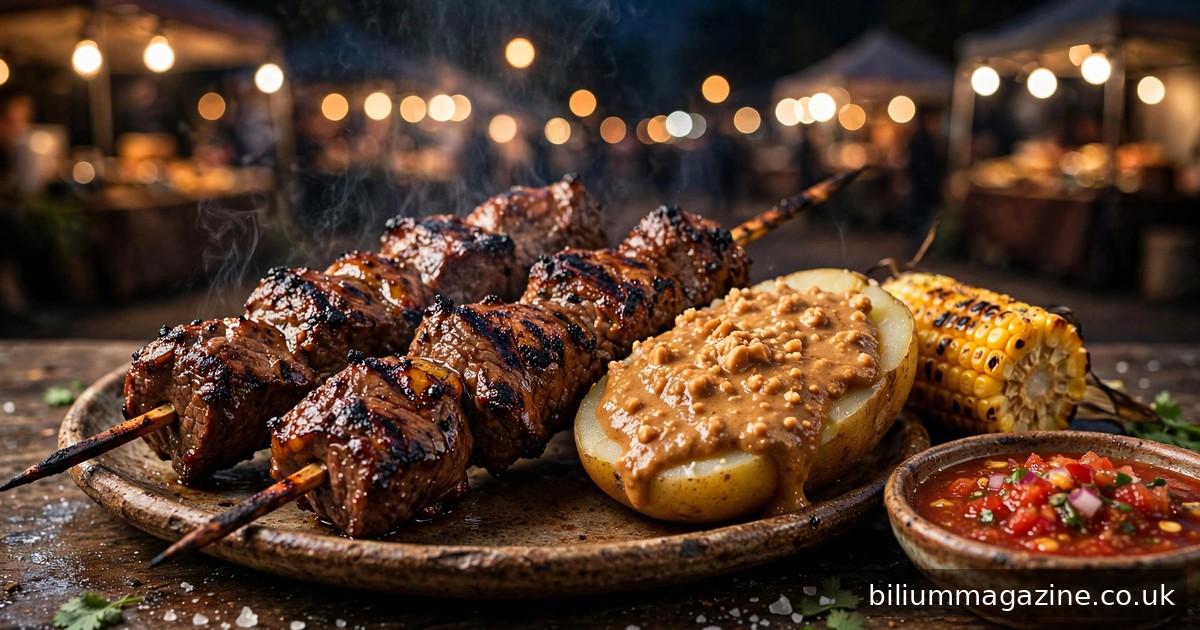
What arrives on the plate is a complete, composed combination rather than just a skewer of meat. The traditional Bolivian plate pairs the grilled skewer with boiled potato (papa), a thick peanut sauce (salsa de maní), and llajwa — the fresh Bolivian salsa of tomato and locoto pepper that shows up at nearly every Bolivian table. Some servings add a small piece of grilled corn on the cob (choclo). Each element has a job: the potato and peanut sauce bring richness, the llajwa brings acidic heat, and the charred, cumin-heavy meat brings smoke and depth.
The dish belongs to the night. In Bolivian cities — La Paz, Cochabamba, Santa Cruz — anticucho vendors set up after dark on street corners and in markets, and they’re famous for a particular bit of theater: fanning their charcoal into dramatic flames that send the irresistible aroma down the street to pull in customers. The anticucheras are as much a part of Bolivian food culture as the dish itself. It’s one of the country’s favorite night delicacies, eaten standing up, off a small plate, usually with a crowd.
Anticucho Boliviano vs. Peruvian Anticucho: The Real Differences
This is where most searches go sideways. Peru’s anticuchos are more famous internationally, so many restaurants serve the Peruvian version while diners search for the Bolivian one. The two share Andean roots and the same core technique — marinated beef heart, skewered, grilled over charcoal — but the spicing and the plate are genuinely different.
The pepper. Peruvian anticuchos are built on ají panca, a dried pepper that gives a brick-red color and a mild, slightly fruity heat. Bolivian anticucho leans on locoto and ají colorado, which run sharper and hotter. If the skewer in front of you glows deep red and tastes gently sweet-hot, you’re eating Peruvian style. If the heat is brasher and the cumin is louder, you’re closer to Bolivia.
The peanut sauce. This is the single clearest marker. The Bolivian plate comes with a thick, warm peanut sauce spooned over the potato — slightly sweet, slightly spicy, rich enough to coat rather than pool. The Peruvian version doesn’t have it. If there’s no peanut sauce on the plate, you are not eating anticucho boliviano, no matter what the menu says.
The llajwa. Bolivia’s fresh tomato-and-locoto salsa is the standard condiment alongside the skewer. It provides the acidic, fiery counterpoint the rich plate needs. Peruvian anticuchos typically come with their own ají-based sauces, but llajwa specifically is the Bolivian signature.
The meat cut. Both traditions favor beef heart, but Bolivian preparations often use thinner fillets, which cook faster and pick up more char per bite. Some vendors also do chicken-heart or mixed versions, though beef heart remains the classic.
Neither version is more correct — they’re regional expressions of a shared tradition. But when you’re specifically hunting the Bolivian one, the peanut sauce is your litmus test. Ask for it by name if it’s missing; a real Bolivian kitchen will know exactly what you mean.
What Makes a Great Anticucho Boliviano
Use this checklist the next time a plate lands in front of you. Great vendors nail all five; average ones manage two or three.
1. Real fire char. Anticuchos need charcoal or wood fire — full stop. You’re looking for visible char marks, a dark caramelized crust, and a smoky aroma that hits you before the first bite. Gas-grilled versions exist, but they taste flat by comparison. If the meat looks steamed or merely browned, the kitchen cut the corner that matters most.
2. Cumin-forward marinade. The first flavor past the char should be cumin, followed by garlic and a background warmth from the peppers. The vinegar should brighten without making the meat taste sour. A skewer that tastes only of smoke was rushed through the marinade; one that tastes only of spice never saw proper fire. The balance is the craft.
3. Proper beef heart texture. Beef heart surprises first-timers: it’s lean, dense, and milder than its reputation suggests — closer to a rich steak than to liver. It should be tender with a pleasant chew, never rubbery and never mushy. Rubber means undercooked or poor-quality meat; mush means it sat too long. A restaurant that substitutes sirloin or chicken isn’t serving the traditional dish, though it can still be tasty — just know what you’re getting.
4. Thick peanut sauce. The salsa de maní should be thick enough to coat the potato, served warm, with a gentle heat and a hint of sweetness. Thin, watery peanut sauce was stretched with too much liquid or made without enough peanut paste. This is a common failure point, and it’s an easy one to spot before you even taste it.
5. The full plate. Tender boiled potato all the way through, fresh llajwa with visible tomato and pepper, and ideally choclo. The potato’s job is to absorb — sauce, meat juices, everything. A mealy or undercooked potato breaks the whole composition.
How to Find the Best Anticucho Boliviano Near You
Anticucho boliviano is rare enough that you need a strategy. Here’s the order of operations that works.
Step 1: Target Bolivian restaurants first. Search “Bolivian restaurant near me” rather than the dish name. The cities with the deepest Bolivian food scenes in the US are well documented: the DC metro area and Arlington, Virginia, home to the largest Bolivian community in the country, where anticuchos appear as starters and set-menu items; Providence, Rhode Island, where the Bolivian community has supported traditional food businesses for decades; Queens, New York, particularly Jackson Heights and its mixed Andean restaurant scene; and Miami, where South American neighborhoods host Bolivian kitchens, though availability can be inconsistent. If you live near any of these, you’re in luck.
Step 2: Mine community events. Here’s the insider truth: some of the most authentic anticucho boliviano outside Bolivia isn’t in restaurants at all. Bolivian cultural festivals, church fundraisers, independence-day celebrations, and community gatherings often feature home cooks and vendors grilling over real charcoal — closer to the street original than any restaurant plate. Search “[your city] Bolivian festival” or follow local Bolivian community groups on social media. Mark the calendar; these events are seasonal.
Step 3: Check Latin markets and food trucks. Latin American grocery stores with prepared-food sections sometimes grill skewers on weekends. South American food trucks at markets and events are another strong bet — a truck with a visible charcoal grill and a Bolivian flag is worth pulling over for. For general tactics on vetting unfamiliar spots, our guide to finding the best restaurants near you covers review-reading and authenticity signals that apply here too.
Step 4: Call before you go. Anticucho is often a weekend or evening item, not an all-day menu staple. A two-minute call — “Do you serve anticucho boliviano, with the peanut sauce?” — saves a wasted trip and tells you immediately whether the kitchen knows the dish. If they hesitate at “peanut sauce,” you’ve got your answer.
Step 5: Read the menu for the tells. A menu that also lists salteñas, llajwa, and picante de pollo is cooking real Bolivian food. A menu where “anticuchos” sits alone among tacos and empanadas is probably serving a generic skewer. The company a dish keeps on a menu tells you how seriously the kitchen takes it.
What to Expect: Price, Portions, and the Experience
Anticucho boliviano is street food at heart, and pricing usually reflects that — expect appetizer-to-moderate-main-course prices, often in the $10–$18 range for a plate with potato and sauces at a restaurant, less at a food truck or festival stand. Portions are satisfying rather than huge: typically one or two skewers with the full accompaniment plate.
Eat it the Bolivian way: a bite of meat, a bite of peanut-sauced potato, a dab of llajwa, repeat. The composition is designed to be eaten in combination — isolating the components misses the point. Don’t be shy about asking for extra llajwa; vendors expect it.
One more expectation to set: beef heart is not an “extreme” eating experience, despite how it sounds. If you’re bringing a hesitant friend, describe it honestly — lean, mild, steak-like, wrapped in cumin and smoke. The peanut sauce and potato do most of the talking. Most skeptics convert on the first skewer.
The Home-Grill Shortcut
Can’t find it near you? Beef heart is the only hard part, and it’s easier than you’d think: ask a butcher, try Latin or halal markets, or check the organ-meat section of well-stocked grocery stores. A beef heart usually weighs three to four pounds and costs very little.
The marinade (for about 2 pounds of cleaned, cubed heart): a third of a cup of red wine vinegar, a quarter cup of oil, six minced garlic cloves, two tablespoons of ground cumin, a tablespoon of dried oregano, a teaspoon of salt, and dried locoto or ají colorado to your heat tolerance — start with a tablespoon of flakes. Marinate at least 12 hours; 24 is better. The acid and time do the tenderizing work.
The peanut sauce: simmer a cup of roasted peanuts (blended smooth with water) with a sautéed onion, a clove of garlic, a pinch of cumin, and a dried pepper until thick — about 20 minutes. Salt to taste. It should coat a spoon.
The llajwa: chop two ripe tomatoes, half an onion, and one fresh hot pepper very fine, mix with salt and a squeeze of lime. Fresh, raw, done in five minutes.
Thread the meat onto soaked wooden skewers, grill over the hottest charcoal fire you can build for about three minutes per side, and serve with boiled yellow potatoes, the peanut sauce, and llajwa. It won’t have the La Paz night-market atmosphere, but the flavors will be unmistakably right — and you’ll understand exactly what to demand from a restaurant version.
Frequently Asked Questions About Anticucho Boliviano
What does beef heart taste like?
Milder than you’d expect. Beef heart is a lean, dense muscle — it tastes like a rich, slightly mineral steak, not like liver or offal. The strong marinade and charcoal char dominate the flavor. Most people who try it blind can’t identify the cut.
What’s the difference between Bolivian and Peruvian anticuchos?
Both are marinated beef-heart skewers grilled over charcoal, but the Bolivian version uses locoto and ají colorado for sharper heat and is served with peanut sauce, boiled potato, and llajwa. The Peruvian version uses ají panca for a milder, fruitier heat and typically skips the peanut sauce.
Is anticucho boliviano spicy?
Moderately. The locoto pepper brings real heat, but the peanut sauce and potato mellow it, and you control the fire level with the llajwa on the side. If you’re heat-sensitive, eat more potato and go light on the salsa.
Where can I buy beef heart?
Ask a local butcher — most can order one. Latin American, halal, and Eastern European markets often carry it, and some large grocery stores stock it in the organ-meat section. It’s inexpensive because demand is low, which is your advantage.
Can I make anticucho boliviano without a charcoal grill?
You can, but you’ll lose the defining smokiness. A screaming-hot cast-iron grill pan is the best indoor substitute — get it nearly smoking and don’t crowd the skewers. A gas grill works in a pinch. Whatever you do, don’t bake them; the dish needs direct, fierce heat.
What is llajwa?
Llajwa (pronounced “yah-kwah”) is Bolivia’s ubiquitous fresh salsa: chopped tomato, locoto pepper, and salt, sometimes with onion or herbs. It’s served alongside countless Bolivian dishes and is the standard condiment for anticucho boliviano, providing the acidic, spicy counterpoint to the rich peanut sauce and charred meat.
Final Word on the Best Anticucho Boliviano Near Me
If you remember one thing from this guide, let it be the peanut sauce test. When you’re searching for the best anticucho boliviano near me, ignore the menu poetry and look at the plate: real charcoal char, cumin you can smell, and a thick peanut sauce over the potato with fresh llajwa on the side. That combination doesn’t happen by accident — it’s the fingerprint of a kitchen that knows Bolivia. Everything else is just a skewer.
