

Best Ajiaco Colombiano Near Me: A Bogotá Classic, Explained
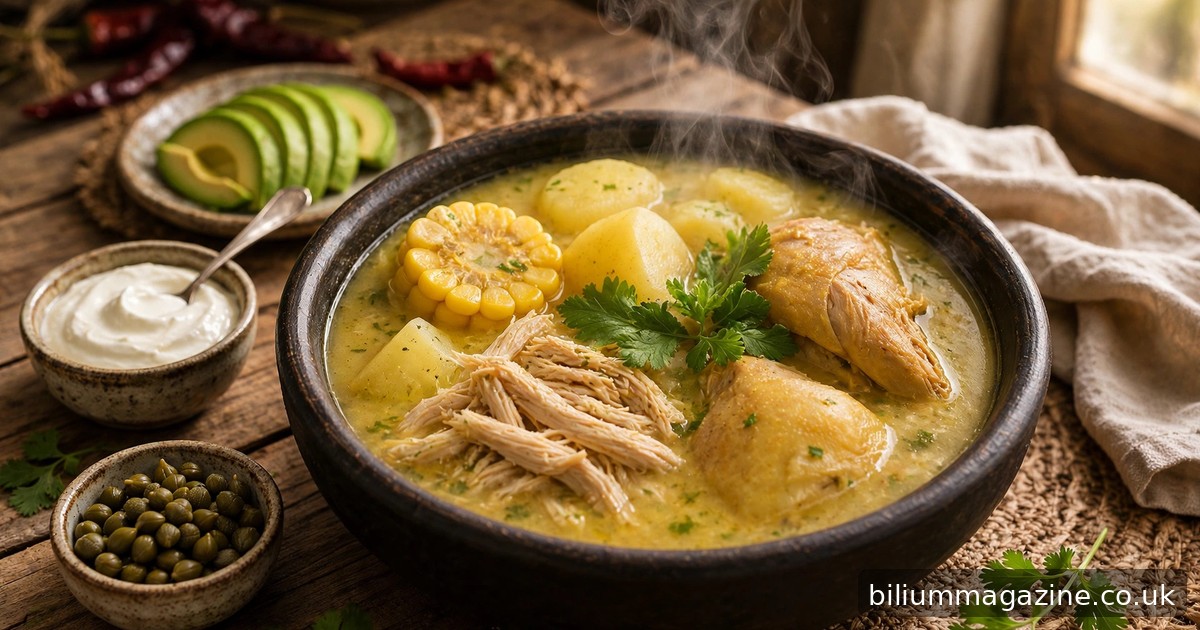
If you’re searching for the best ajiaco colombiano near me, you’re looking for one of South America’s great comfort soups — and one of the hardest to fake. Ajiaco is Bogotá’s signature dish: a thick, hearty chicken-and-potato soup built on three kinds of potato, sweet corn, and a wild herb called guascas that gives it a flavor nothing else can imitate. Served with cream, capers, and avocado on the side, it’s the kind of bowl that makes a rainy day feel like a plan.
The challenge is authenticity. Ajiaco’s soul ingredient, guascas, doesn’t grow everywhere, and a version made without it — or with a single potato variety — is just chicken soup wearing a costume. This guide explains what real ajiaco is, how to recognize it, where to find it near you, what it costs, and how to make a faithful version at home.
What Ajiaco Colombiano Actually Is
Ajiaco santafereño — the full name, after Santa Fe de Bogotá — is the traditional soup of Bogotá and the surrounding Cundinamarca region in the Colombian Andes. Colombia’s own Ministry of Foreign Affairs describes it as a defining dish of the capital: chicken, potatoes, corn, and guascas, slow-simmered into something between a soup and a stew.
The architecture is specific. Three potato varieties go into the pot, each with a job: papa criolla, a small, intensely yellow Andean potato that disintegrates during cooking and thickens the broth to a silky, almost chowder-like body; papa sabanera, which holds its shape and gives you chunks to bite; and papa pastusa, somewhere in between. Chicken — traditionally bone-in pieces — simmers in the same pot, and ears of corn (or chunks of cob) cook alongside. The whole thing is seasoned with guascas and not much else: salt, maybe a bay leaf. That’s it. No cumin-heavy spice blends, no tomato base, no shortcuts.
And then there’s the herb. Guascas (Galinsoga parviflora), known in English as gallant soldier, is a weedy little plant that grows wild in the Andes. Its flavor is grassy, slightly floral, faintly artichoke-like — and it is the non-negotiable signature of the dish. Ajiaco without guascas is, to a Bogotano, simply not ajiaco. Outside Colombia, dried guascas is sold at Latin markets and online; it’s the one ingredient worth hunting down.
At the table, ajiaco arrives with its accompaniments: a drizzle of heavy cream (crema de leche), a spoonful of capers, and slices of avocado. Each diner customizes the bowl — the cream rounds the broth, the capers add briny pops, the avocado adds richness. Rice on the side is common. It’s a complete, filling meal in a bowl, traditionally eaten at lunch, which remains the main meal of the day in much of Colombia.
What Makes a Great Ajiaco
Because the ingredient list is short, there’s nowhere to hide. Here’s what separates the real thing from an imposter.
- The guascas must be there. Taste the broth first, before the cream and capers. You should detect a distinct herbal, almost floral note underneath the chicken and potato. If the soup tastes like generic chicken soup, the herb is missing or the kitchen used a token pinch.
- The broth should be thick. The disintegrating papa criolla gives real ajiaco a naturally thickened, velvety body — no flour, no cream blended in. A thin, watery broth means the wrong potatoes or too short a simmer.
- Chicken on the bone, falling apart. Traditionally the chicken cooks in the pot until it’s spoon-tender. Shredded breast meat added at the end is the restaurant shortcut; it’s acceptable, but bone-in pieces signal the traditional method.
- Corn on the cob, not kernels from a bag. Chunks of cob simmered in the soup absorb flavor and look right. Loose kernels are a minor sin, but the cob is the tell.
- The sides arrive separately. Cream, capers, avocado — served alongside, not stirred in. A kitchen that pre-mixes them doesn’t understand the ritual, which is half the pleasure.
Color is another quiet signal: the broth should be pale gold to light yellow, tinted by the papa criolla — never orange (that’s annatto or tomato, wrong dish) and never gray.
How to Find the Best Ajiaco Colombiano Near Me
Outside Colombia, ajiaco lives in Colombian restaurants — and not all of them make it. Here’s how to hunt efficiently.
Search Colombian restaurants, then check the menu. “Colombian restaurant near me” is the starting query; then look for ajiaco specifically on the menu. Many Colombian spots focus on bandeja paisa, empanadas, and rotisserie chicken, and skip ajiaco entirely — it’s a Bogotá regional dish, and restaurants run by families from the coast (Cartagena, Barranquilla) may not serve it at all. Restaurants with Bogotá or Andean roots are your best bet.
Call and ask two questions. First: “Do you serve ajiaco?” Second — the important one: “Do you use guascas?” A kitchen that answers the second question confidently is making the real thing. Hesitation or “what’s guascas?” tells you everything. This one question filters out 90% of disappointments.
Look for lunch service. In Colombia, ajiaco is lunch food — the big midday meal. Colombian restaurants in the US that serve a proper lunch crowd (families, workers, not just dinner daters) are more likely to make traditional soups. A spot that’s only open for dinner is less likely to bother with a slow-simmered soup.
Read reviews for the word “ajiaco” specifically. Look for comments about thickness, flavor, and authenticity — “tastes like home,” “just like Bogotá,” “thick and delicious.” Photos help enormously: look for the pale-gold thick broth, visible corn cob, and the little side dishes of cream and capers. Our guide to finding the best restaurants near you covers the review-reading method in more detail, including how to spot reviewers who’ve eaten the dish in Colombia and can actually judge it.
Check Latin markets with hot food counters. Some of the best ajiaco outside Colombia comes from the prepared-food counters of Latin American markets, where it’s made in big pots for shoppers who know exactly what it should taste like. It’s often cheaper than restaurant versions and made without compromise.
If you’re ever in Bogotá: the pilgrimage spots are La Puerta Falsa in La Candelaria — one of the city’s oldest eateries, steps from Plaza de Bolívar, famous for ajiaco, tamales, and hot chocolate with cheese — and the aptly named El Mejor Ajiaco del Mundo nearby. Expect to pay around 40,000 Colombian pesos (roughly $10 USD as of 2026) for a bowl at a traditional spot. Knowing the reference taste makes you a much sharper judge back home.
What to Expect: Price and Portions
In the US, a bowl of ajiaco at a Colombian restaurant typically runs $14–$20 as of 2026 — for example, around $18.50 at established Florida Colombian spots — and it’s a full meal: the soup is dense with potato and chicken, plus rice, avocado, cream, and capers on the side. Nobody leaves hungry. Some places offer a smaller “taza” (cup) portion for $8–$11, which is a fine way to taste-test a new restaurant before committing to the full bowl.
Portion honesty matters with this dish: a proper ajiaco should contain a real piece of chicken (not shreds), at least one chunk of corn cob, and enough potato to make the broth thick. If your $18 bowl is mostly broth with a few potato cubes, that’s a data point about the restaurant.
Timing: ajiaco is often a weekend or lunch-special item rather than an everyday menu fixture, because it takes hours to make properly. Call ahead if you’re going specifically for it — especially on weekdays, when some kitchens don’t fire up the big pot.
Making It at Home: Worth the Effort
Homemade ajiaco is absolutely achievable, with one sourcing challenge: the potatoes and the herb. Papa criolla is the hard one — it’s rarely sold fresh outside Colombia, though frozen papa criolla appears at well-stocked Latin markets. In a pinch, Yukon Gold potatoes approximate the behavior: waxy enough to hold some shape, starchy enough to thicken. Use two varieties — Yukon Gold plus russet — to mimic the thickening-plus-chunk effect.
Guascas is non-negotiable and obtainable: dried guascas is sold at Latin grocery stores and online, usually in small bags. A tablespoon or two of dried herb per pot is enough; add it in the last 20 minutes so its flavor stays bright.
The method: simmer bone-in chicken pieces (thighs and a breast, or a small whole chicken cut up) in salted water with a bay leaf for about 30 minutes, skimming. Add peeled, chunked potatoes — roughly 2 pounds total — and chunks of corn cob. Simmer another 30–40 minutes until the potatoes are falling apart and the broth has thickened. Add the guascas for the last 20 minutes. Remove the chicken, shred or portion it, return it to the pot. Serve with heavy cream, capers, sliced avocado, and white rice on the side. Total time: about 90 minutes, mostly unattended.
The result won’t be identical to a Bogotá bowl made with true papa criolla, but with real guascas in the pot, it’ll be recognizably, legitimately ajiaco — which is more than most restaurant versions manage.
Frequently Asked Questions
What is ajiaco colombiano made of?
Chicken, three varieties of potato (papa criolla, papa sabanera, papa pastusa), corn on the cob, and the herb guascas, simmered into a thick soup. It’s served with heavy cream, capers, and avocado on the side, usually with rice. That’s the whole ingredient list — the dish’s depth comes from the potatoes and the herb, not from spices.
What does guascas taste like?
Grassy, slightly floral, faintly like artichoke or chamomile. It’s subtle but unmistakable — the background note that makes ajiaco taste like ajiaco instead of chicken soup. Dried guascas from Latin markets works well; there’s no real substitute, though some cooks use a mix of oregano and parsley in desperation. It isn’t the same.
Is ajiaco the same as sancocho?
No. Both are Colombian soups, but sancocho is a heartier, more rustic stew — typically with yuca, plantain, and meat on the bone in a thinner broth — associated with the coast and casual cooking. Ajiaco is specifically the Bogotá potato-and-guascas soup, thicker and more refined. They’re cousins, not twins.
Is ajiaco spicy?
Not at all. Despite the name (which comes from “ají,” the Spanish word for chili pepper — a historical echo, not a current ingredient), traditional ajiaco contains no heat. It’s a mild, comforting, savory soup. If your ajiaco arrives spicy, something non-traditional happened in the kitchen.
Can I make ajiaco without guascas?
You can make a tasty chicken-potato soup, but it won’t be ajiaco — the herb is the dish’s signature. Dried guascas is inexpensive and keeps well; order it online if your local Latin market doesn’t stock it. This is the one ingredient worth planning around.
Is ajiaco gluten-free?
Yes, naturally — chicken, potatoes, corn, herbs, cream, capers, and avocado contain no gluten. It’s one of the safer restaurant orders for gluten-sensitive diners, though as always, check about cross-contact if you’re highly sensitive.
The Takeaway
The best ajiaco colombiano near me is the bowl with guascas in it — thick, pale-gold broth, falling-apart chicken, corn on the cob, and the cream, capers, and avocado served alongside for you to build it your way. Ask about the herb before you order, favor lunch-serving Colombian spots with Bogotá roots, and don’t settle for thin chicken soup in disguise. And if the hunt fails, dried guascas and ninety minutes will get you a pot that most restaurants would be proud to serve.
